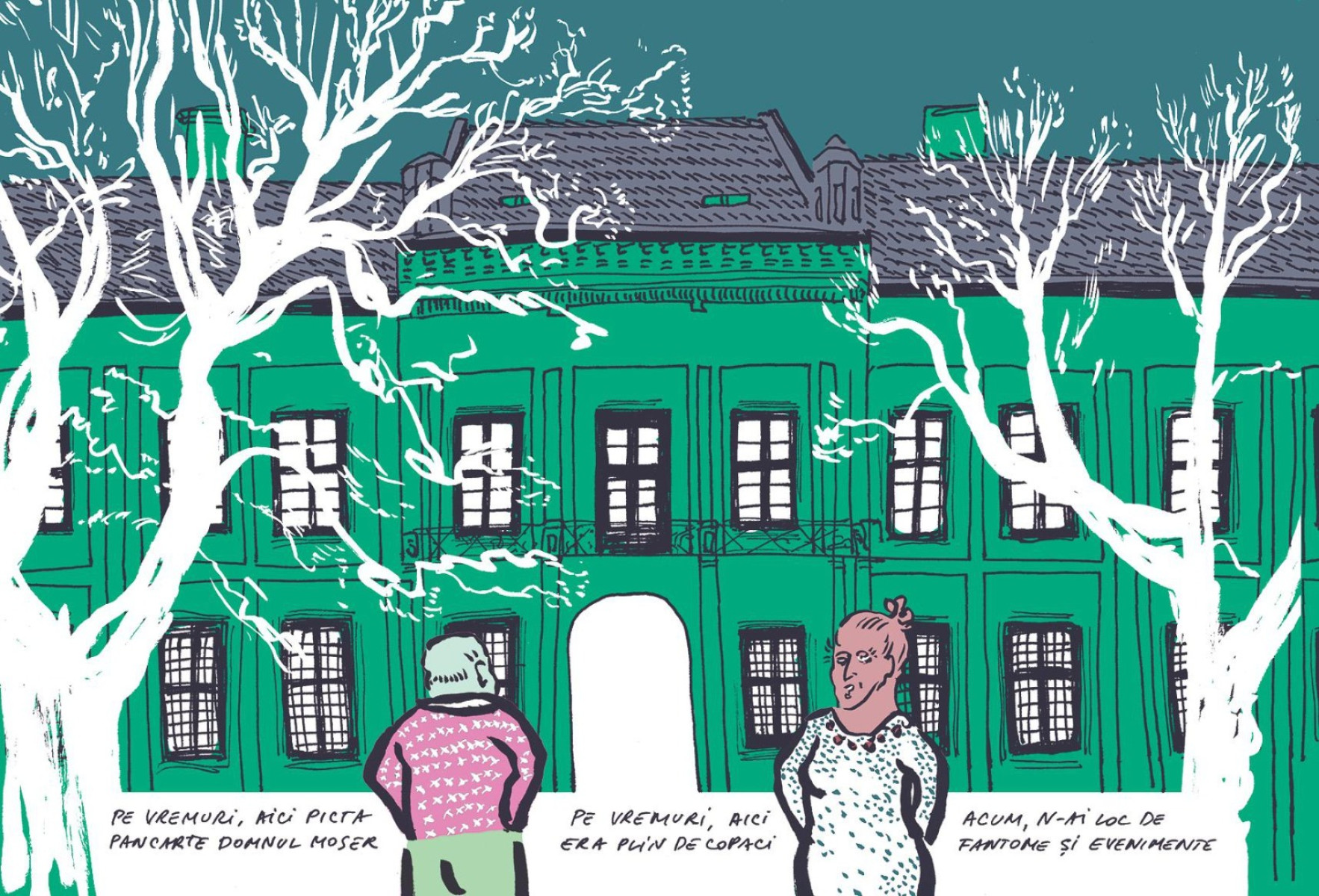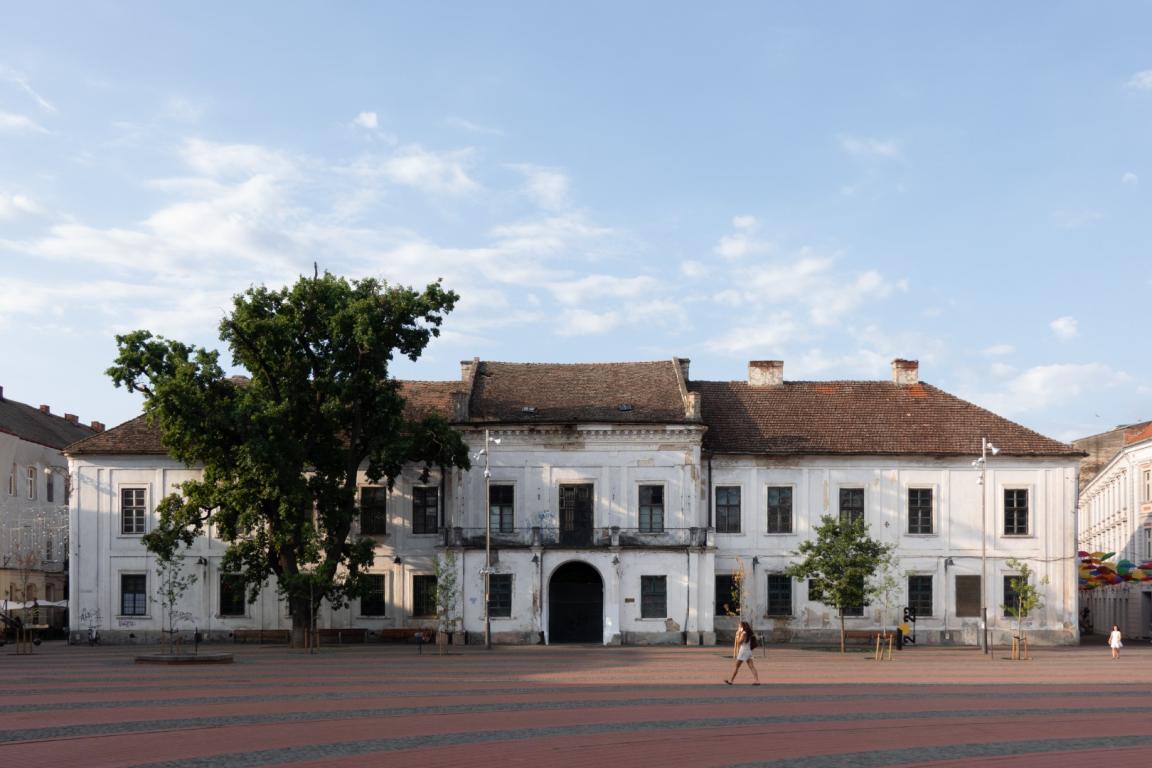
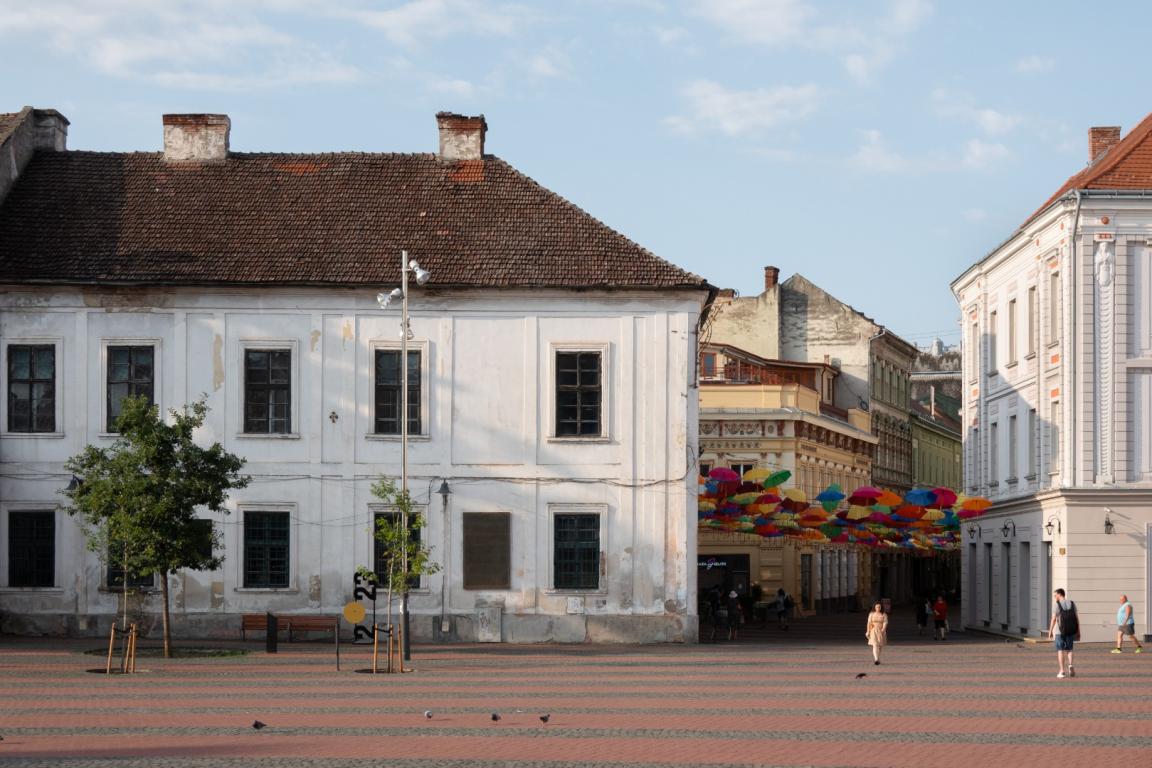
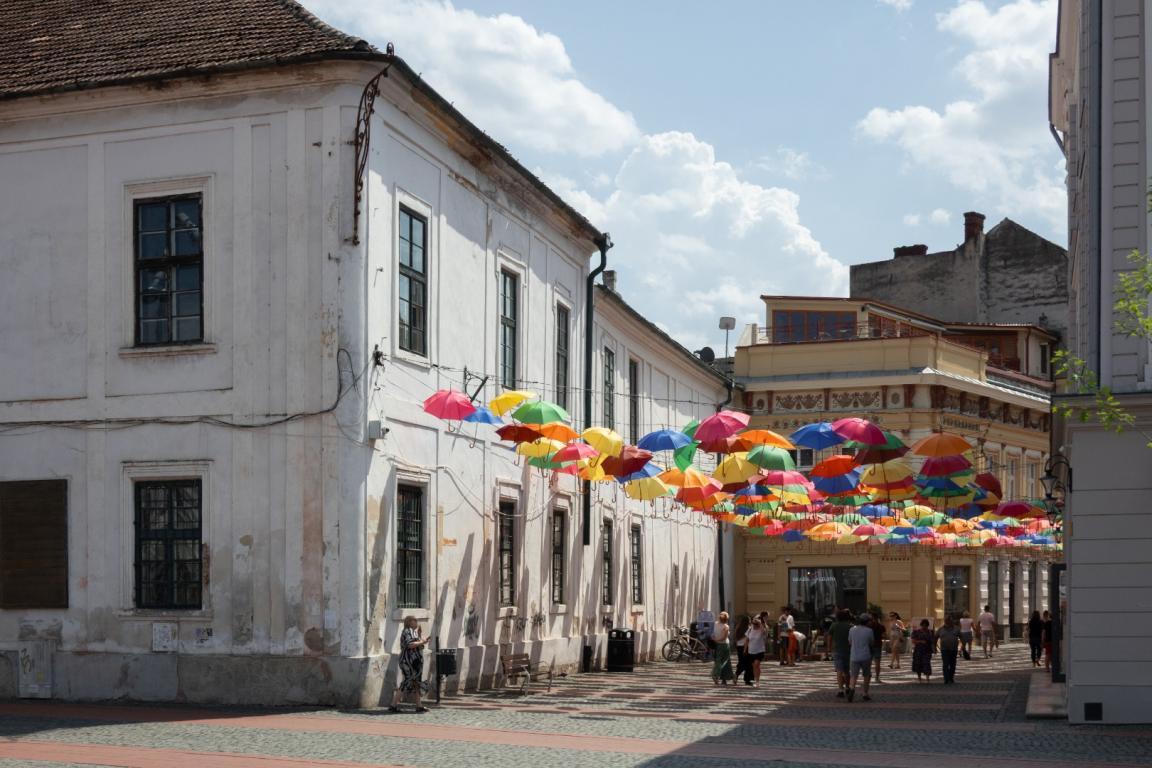
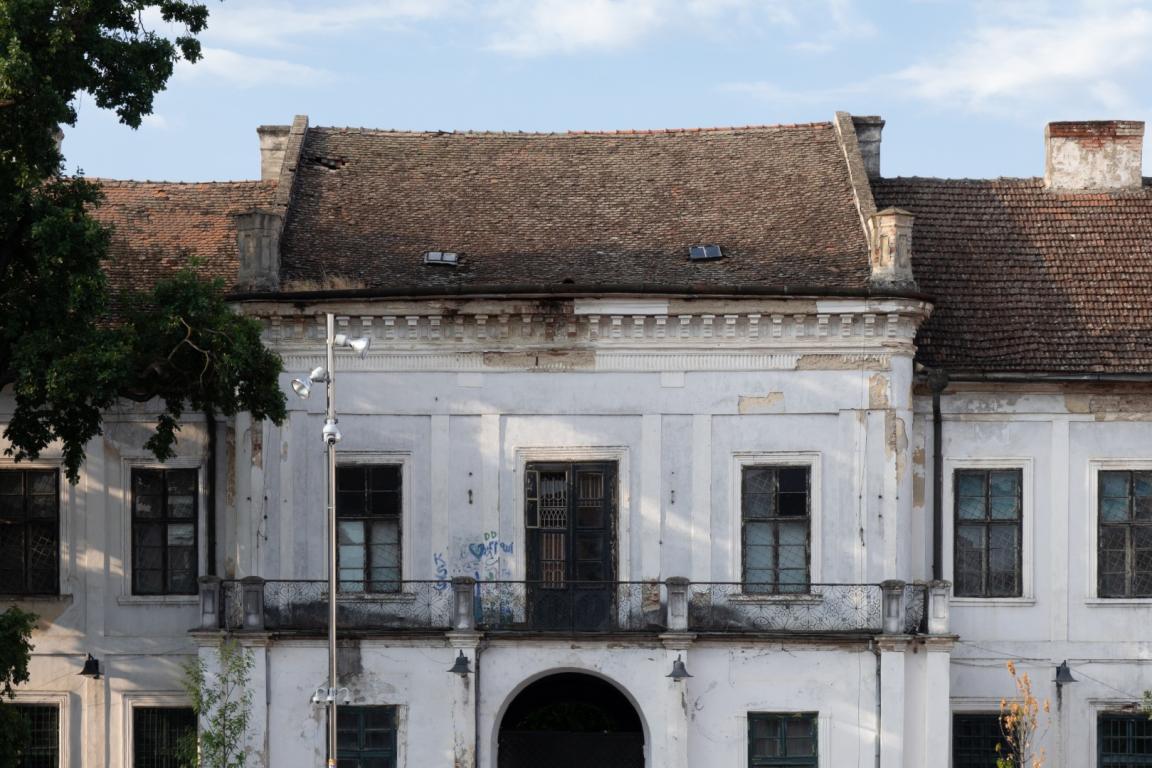
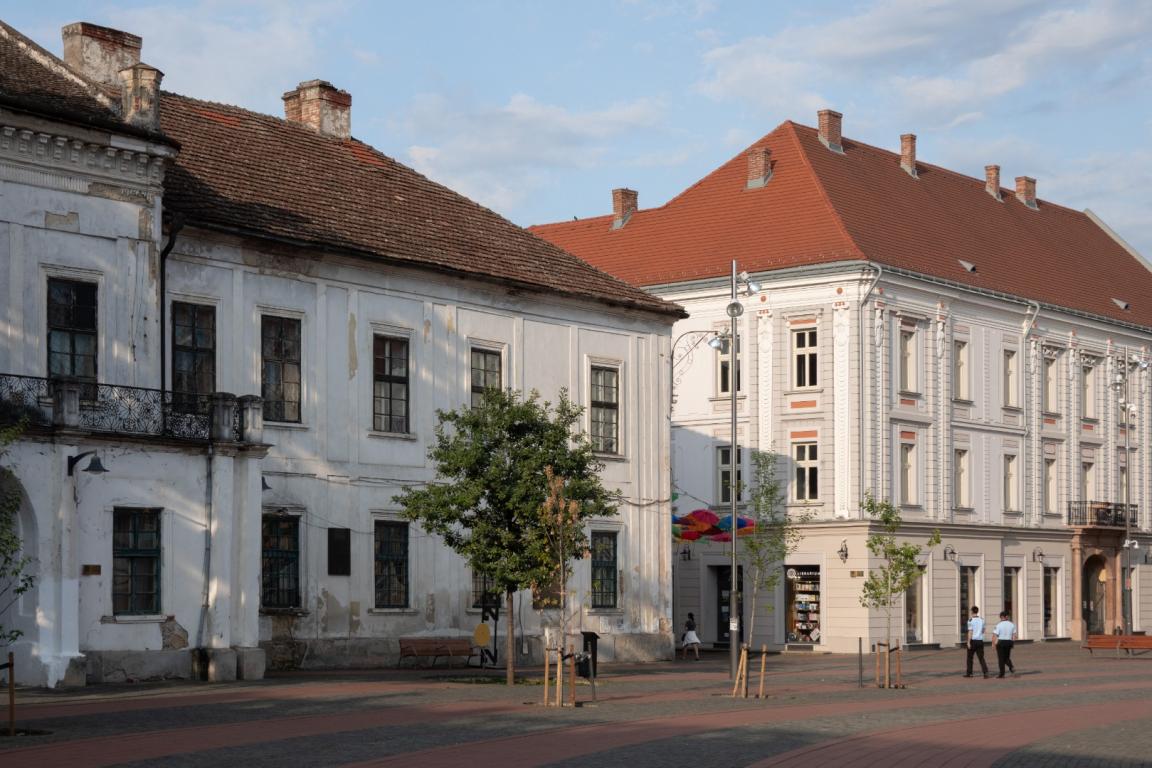
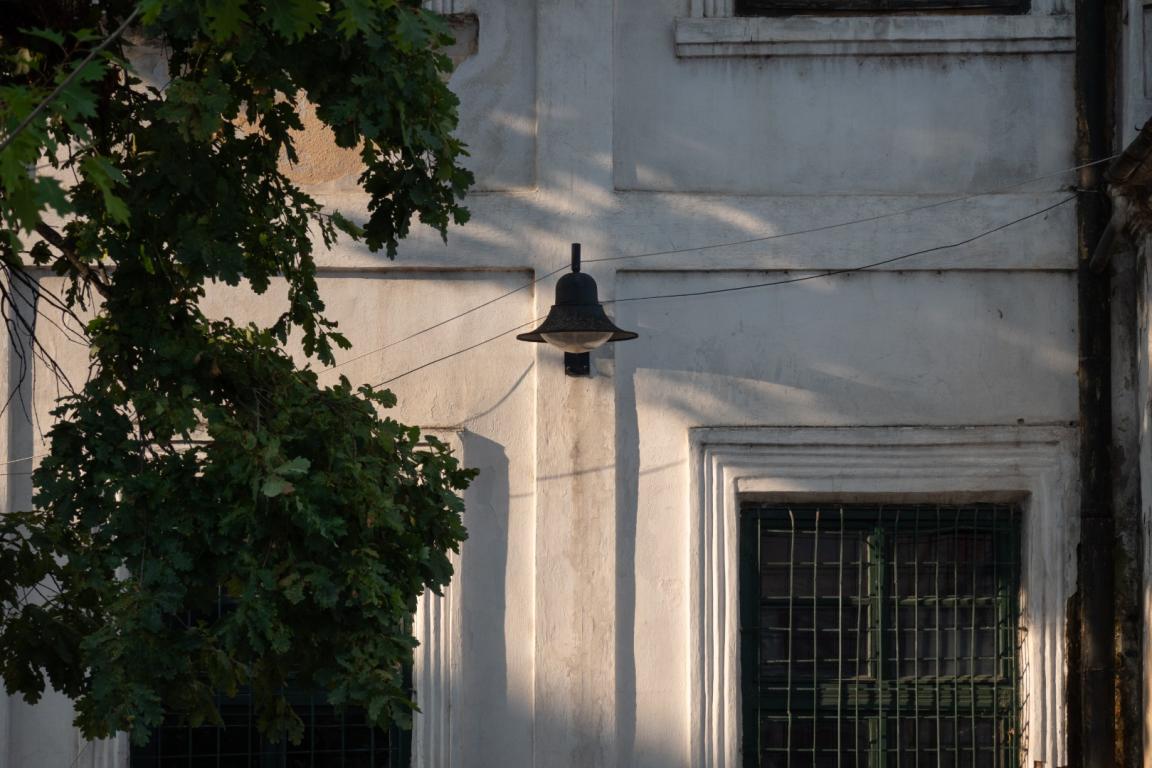
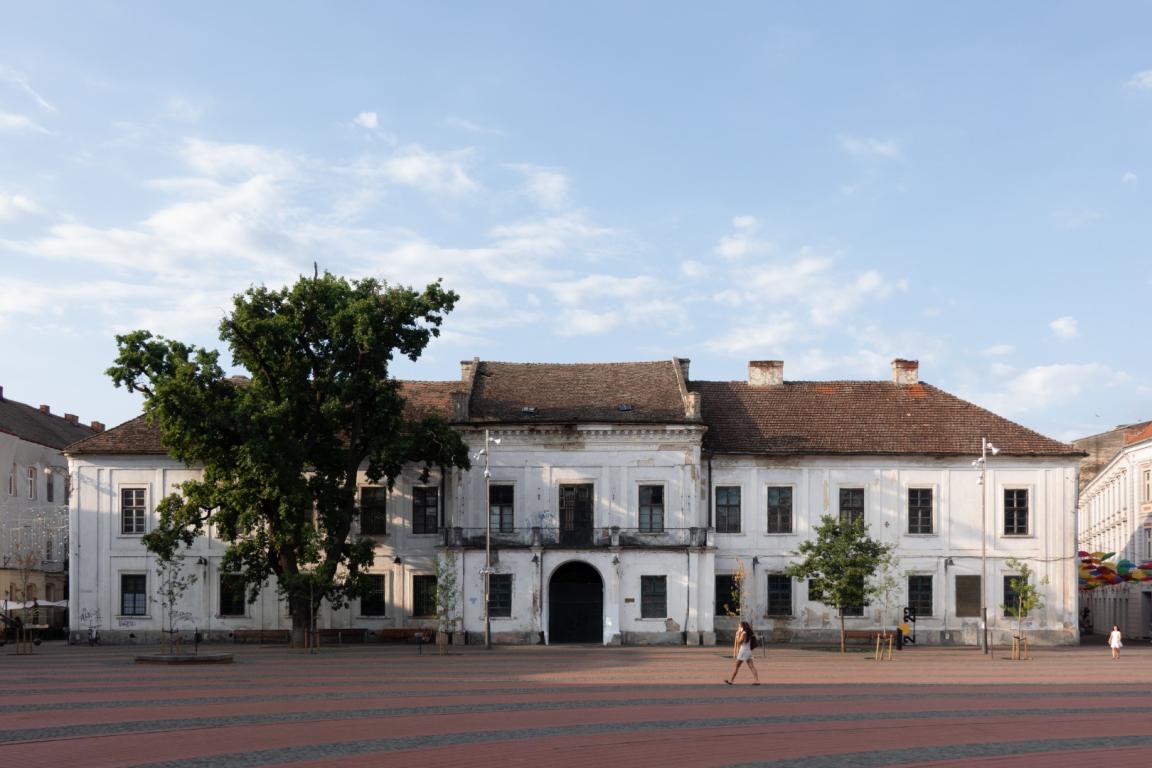
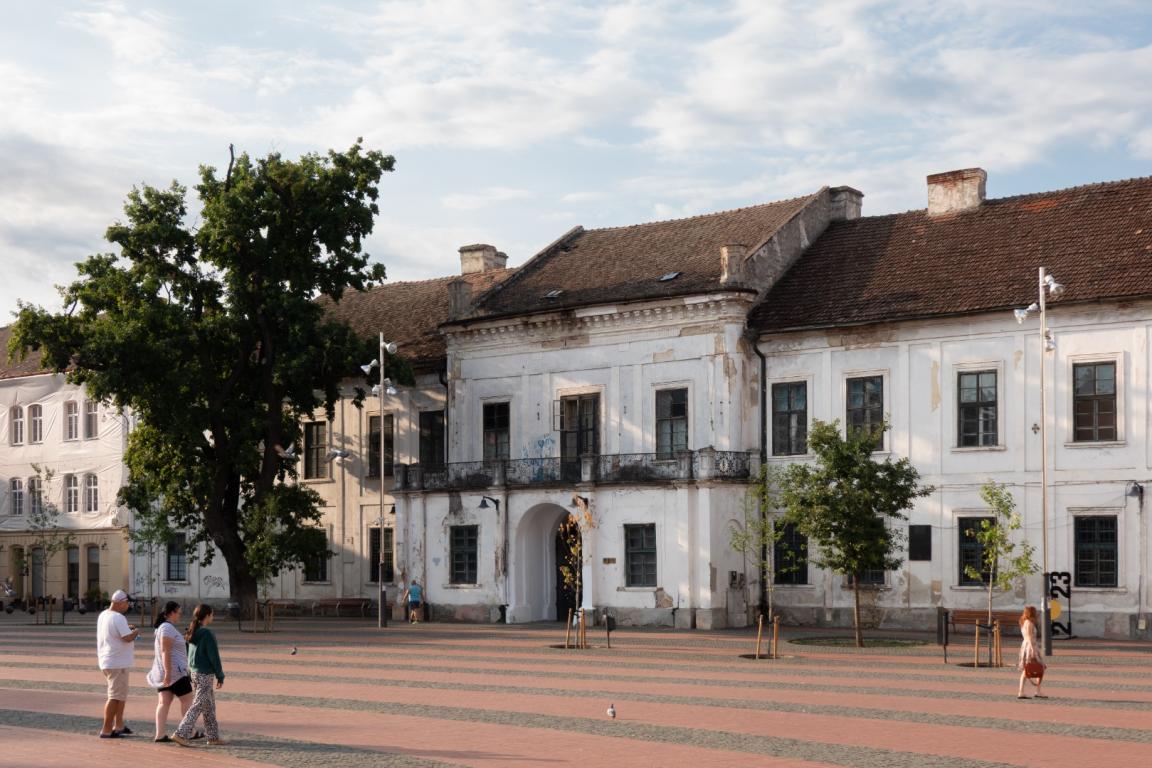
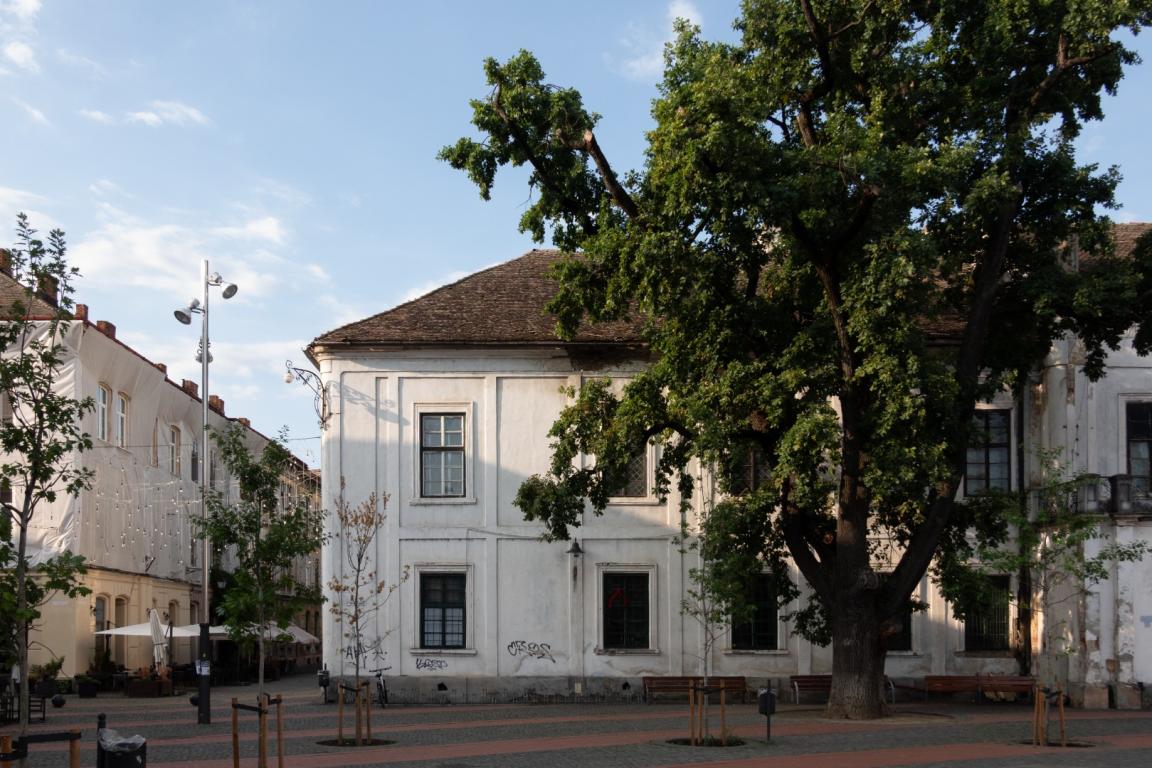
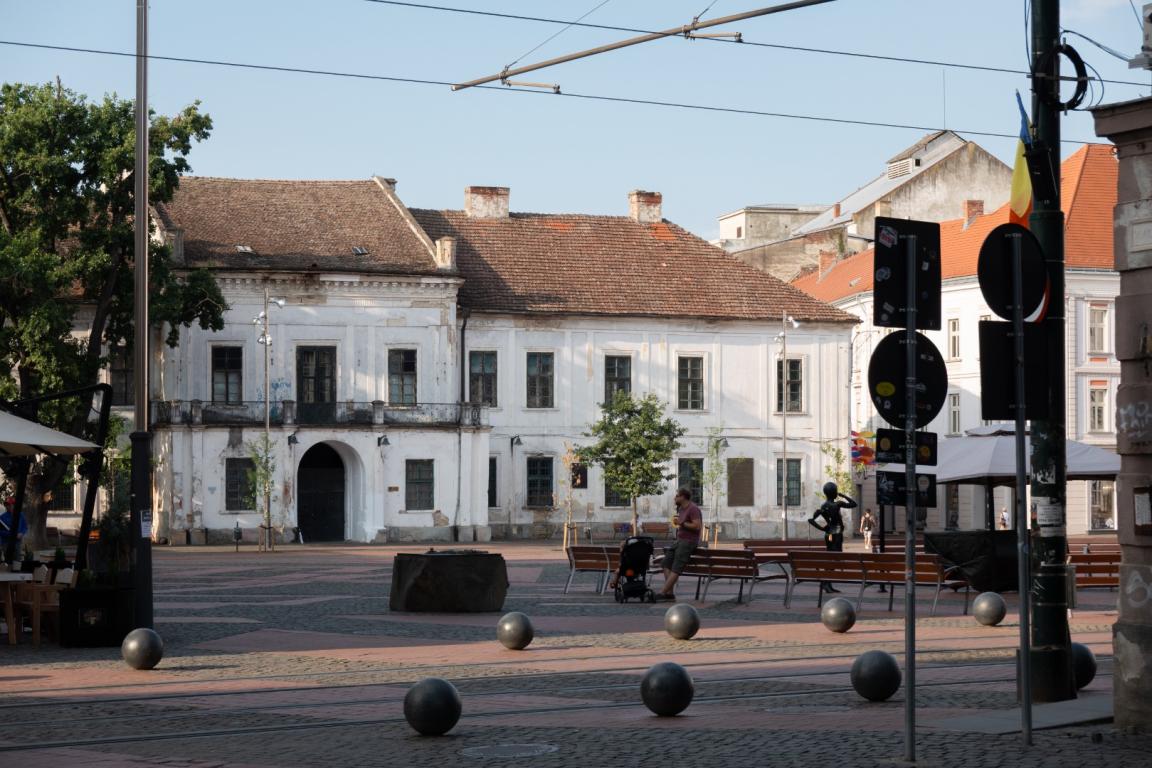
The Generalate House of the Timișoara fortress, formerly the Commander’s House, is one of the oldest Baroque buildings in the city and among the first erected by the new Habsburg administration after the liberation of Banat in 1718. Built in the main square of both the medieval and Ottoman towns, the new Generalate ensured the continuity of the square’s importance—later known as Paradenplatz—which became the civic and military nucleus of the city, while the Generalate building itself served as the true brain of the fortress.
The building first appears on period maps in 1724, remarkably maintaining the same plan layout to this day. It was situated on the old Ottoman canal that supplied the city with drinking water, a canal that separated the Generalate’s inner courtyard from its stables and rear garden before flowing along present-day Alba Iulia Street, until it was enclosed in the 1750s–1760s.
Its appearance in the second half of the 18th century is known from an archival drawing, in which the two-story building with mansard is revealed as a true military and administrative complex. The ground floor contained housing for servants, waiters, and orderlies, as well as kitchens, ovens, a laundry, and coach houses for the Generalate’s carriages and those of visitors. A single-story rear wing, connected to the inner courtyard by a bridge across the canal, housed the stables and accommodation for grooms and newly arrived orderlies.
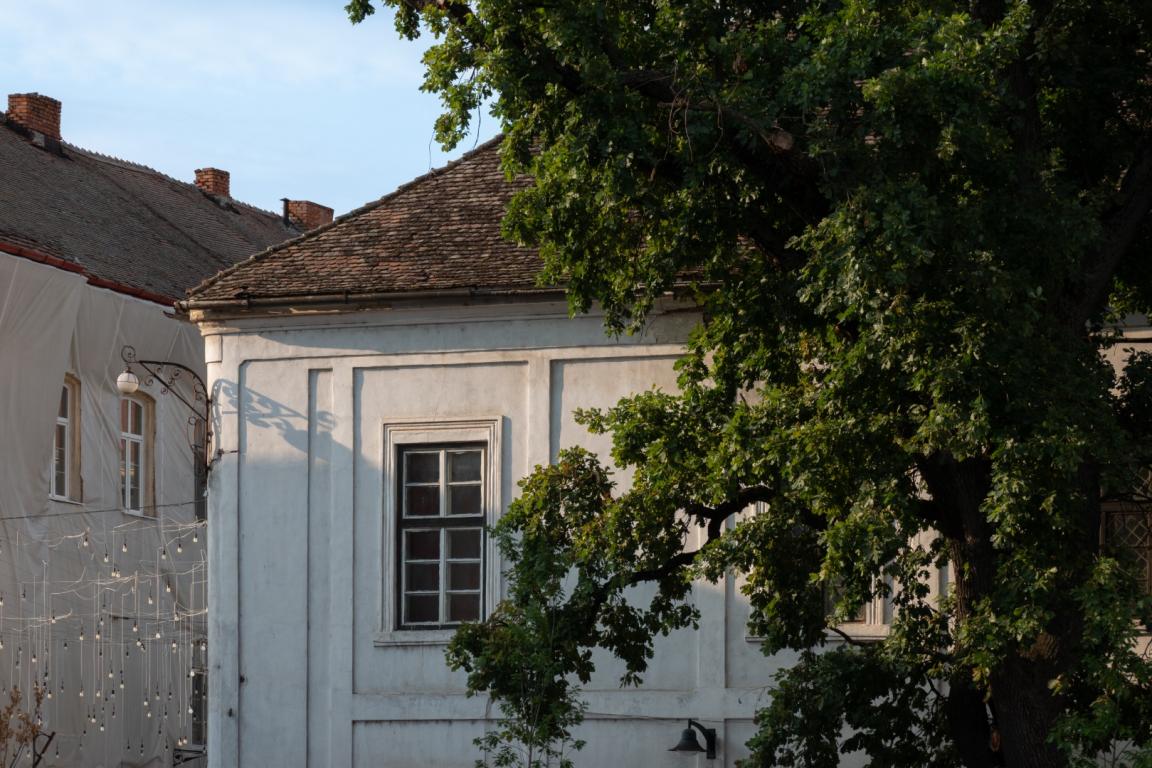
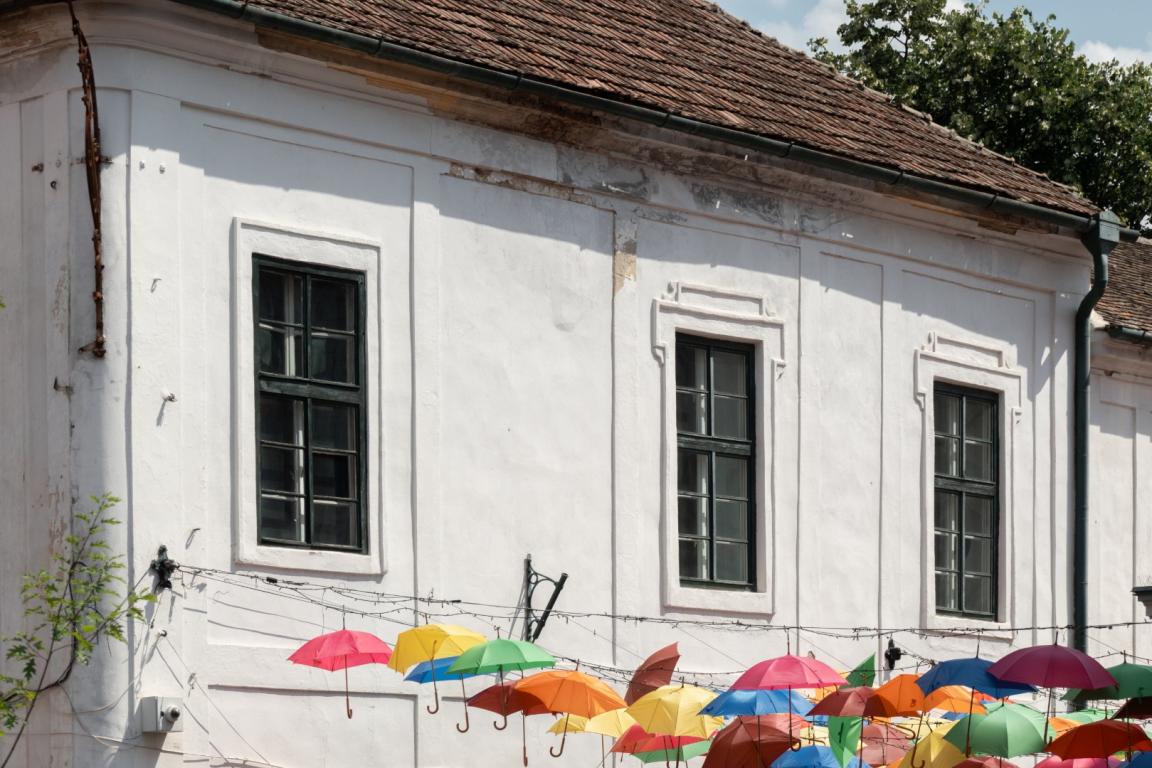
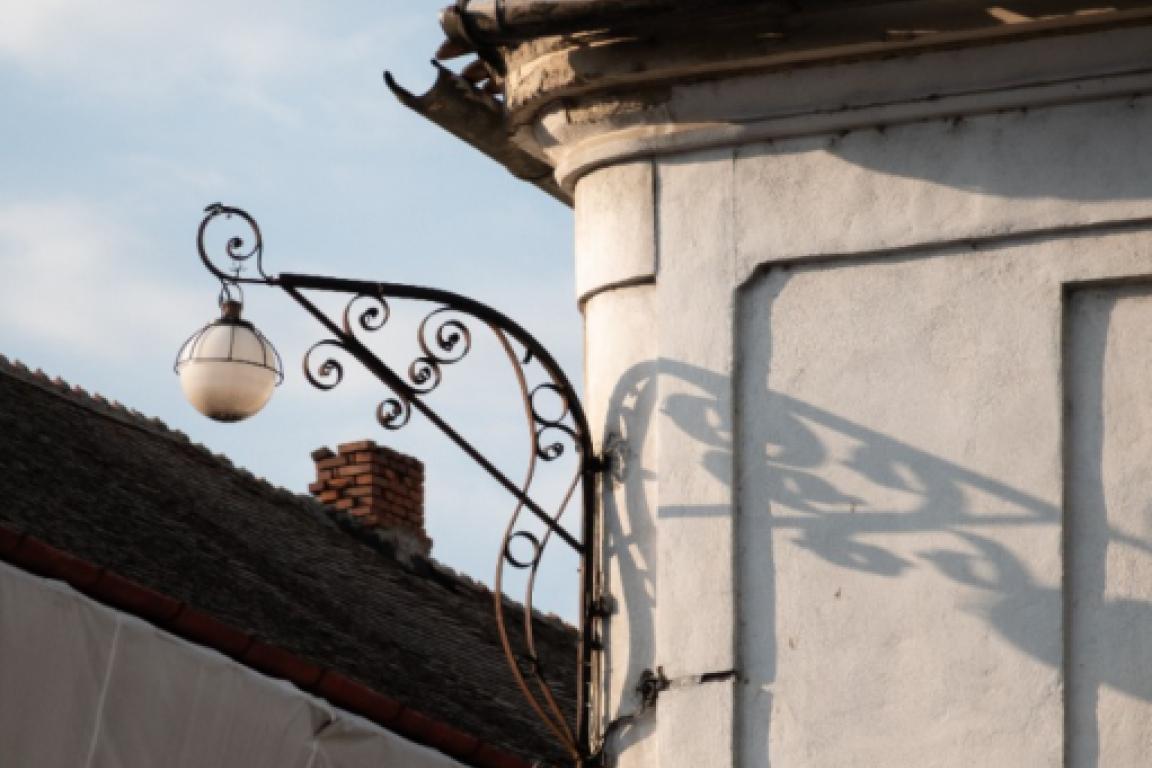
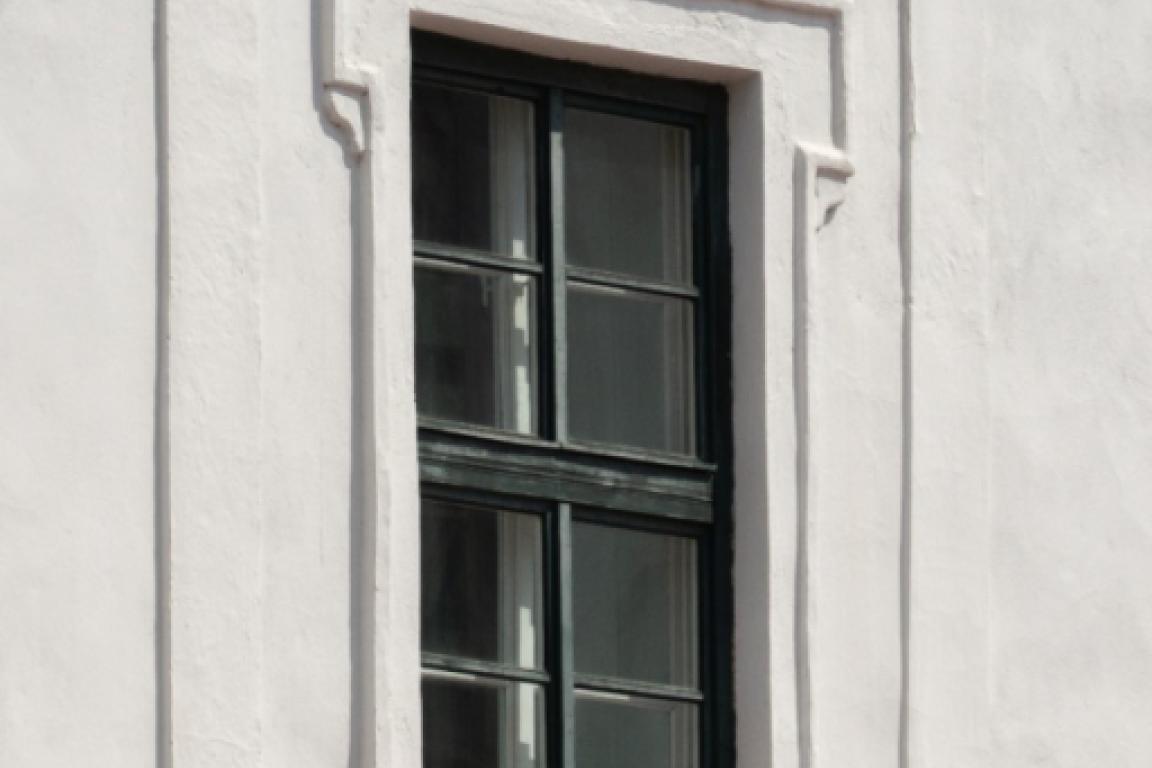
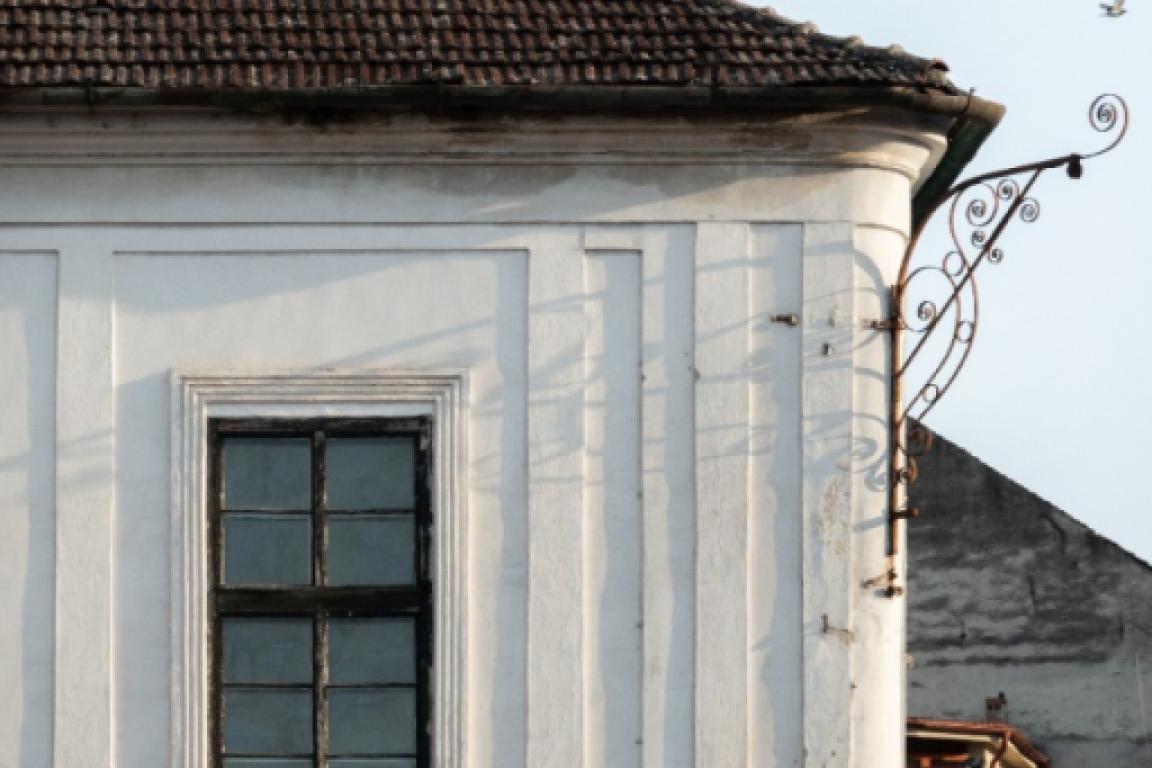
The façades were very simple and sober for their time, reflecting the military function. They were divided by plain and paired lesenes, with Baroque presence felt in the “ear-shaped” and volute window frames, the cornice, the rounded corners of the building, and especially in the high-relief ornament of the central pediment tympanum, which displayed a panoply of weapons, flags, and armor surrounding the imperial double-headed eagle.
The Generalate’s upper floor functioned as the piano nobile, typical of Baroque architecture: a generous antechamber opened access to salons and workspaces, comfortably heated by Baroque stoves, as well as to a secure archive for storing documents in the building’s north wing. In addition, the military officials of the time could enjoy views of the city from two terraces on the upper floor, one of which connected via a bridge to the commander’s garden. As was often the practice of the era, the mansard was arranged to house servants and their families, as well as for storage.
After the siege of 1849, the building lost its Baroque mansard roof, and its main façade was simplified in the Classicizing spirit of the 19th century, when most of the ear-shaped window frames disappeared and a balcony supported by stone consoles was added above the entrance.
The façade was fully reworked and the roof altered again in the second half of the 19th century. Nevertheless, despite these substantial changes, the building still preserves seven original Baroque window frames on Alba Iulia Street, one of them intact.