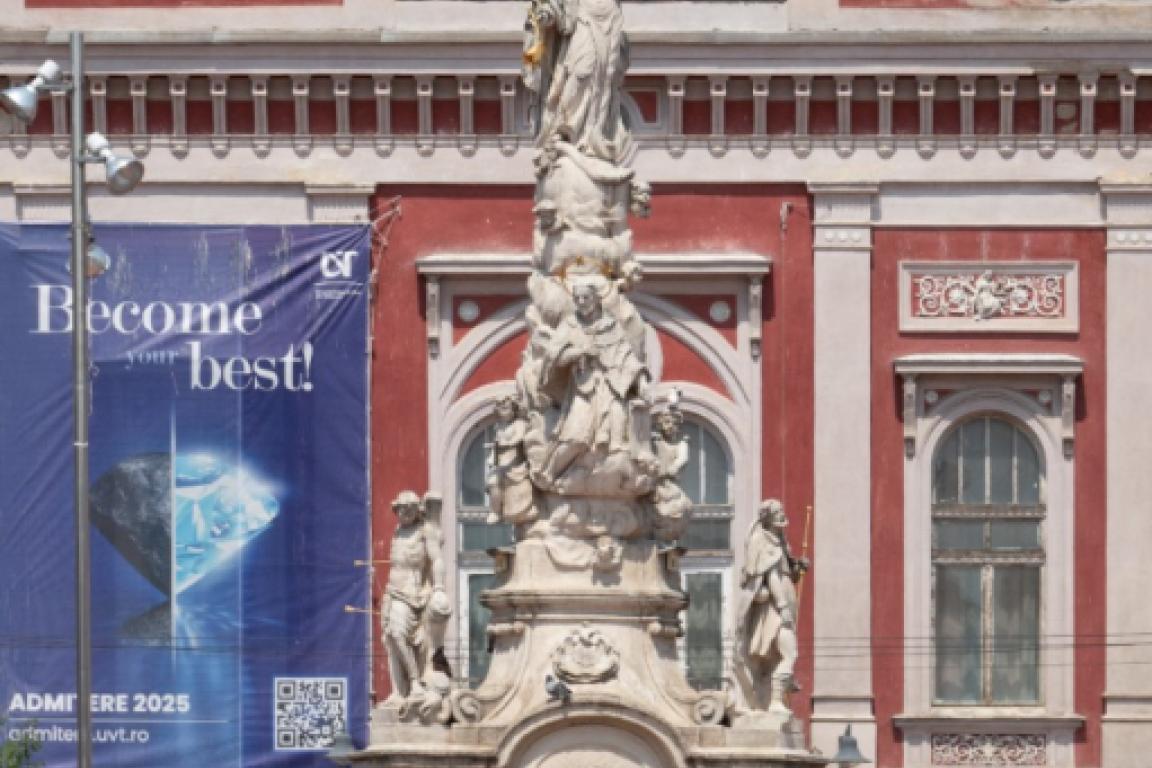
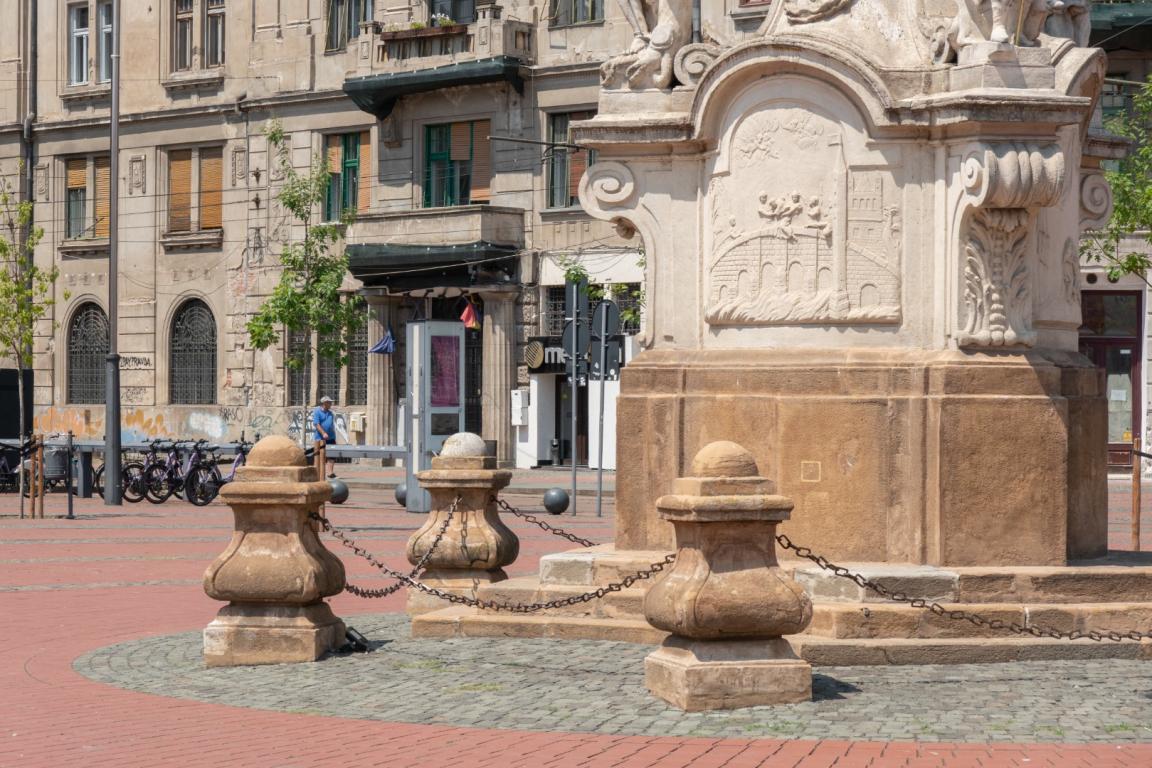
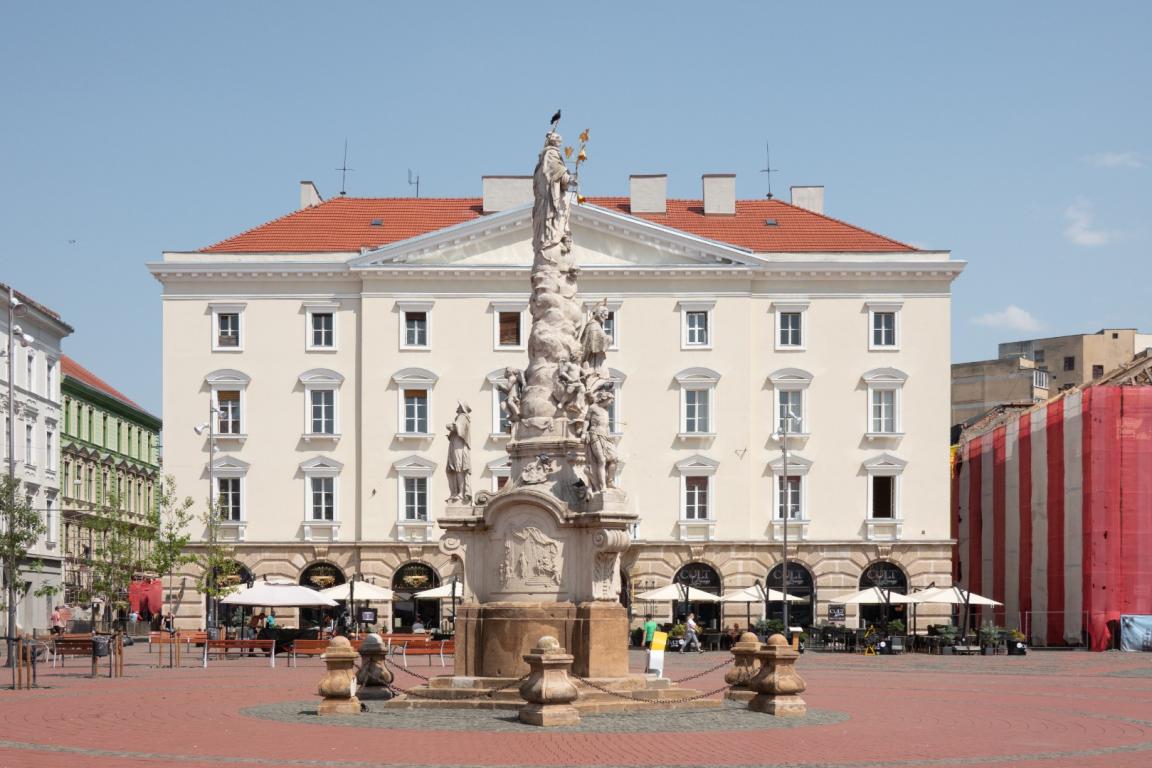
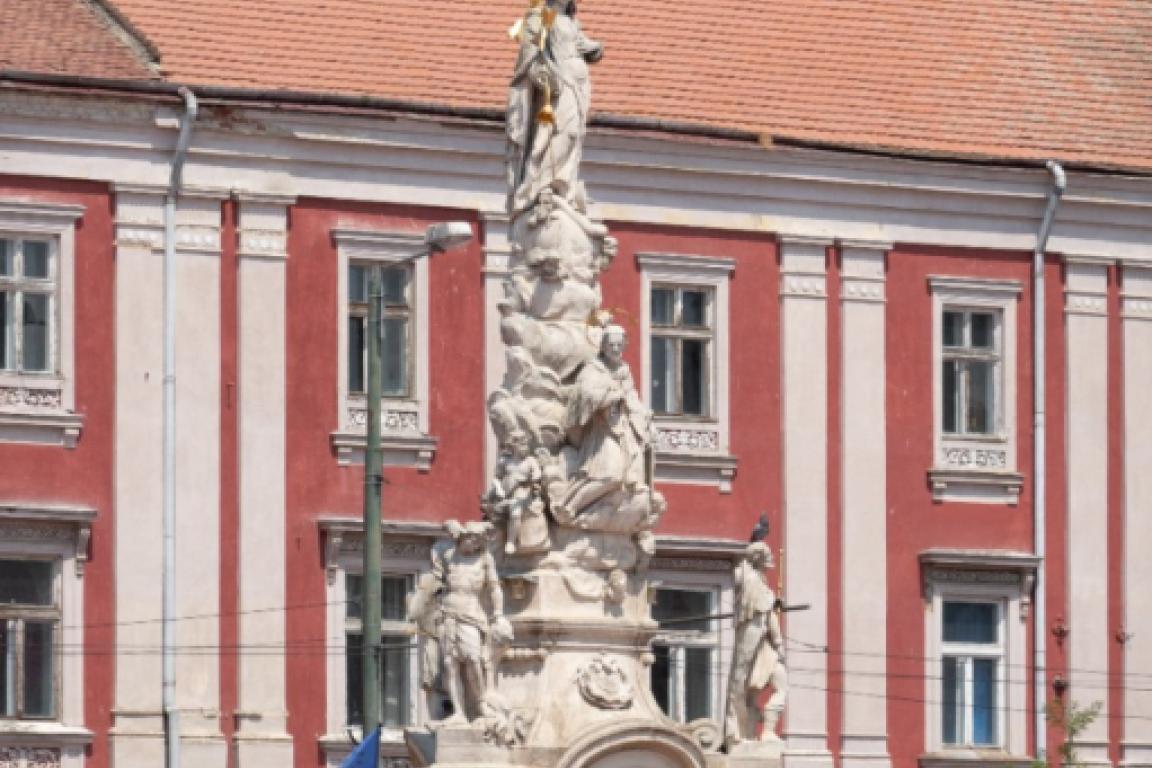
The monument in Liberty Square, known today both as the Monument of the Virgin Mary and the Monument of Saint John of Nepomuk, is one of the most important examples of Baroque public sculpture in Timișoara. Its construction is directly linked to the plague epidemic of 1738–1739, which had a profound impact on the city. In this context, the ensemble can also be understood as a plague column, a votive monument erected as a gesture of gratitude for the end of the epidemic and as an expression of Catholic devotion in Habsburg Banat.
The initiative for its construction is associated with the congregation dedicated to Saint John of Nepomuk, highly active in the religious and public life of the city. Commissioned around 1753 and executed in Vienna, the monument was sculpted by E. Wasserburger and F. Blim, in close stylistic connection with the circle of Raphael Donner, to whom some specialists attribute the original designs. The ensemble was transported to Timișoara by water and installed in Liberty Square in 1756.
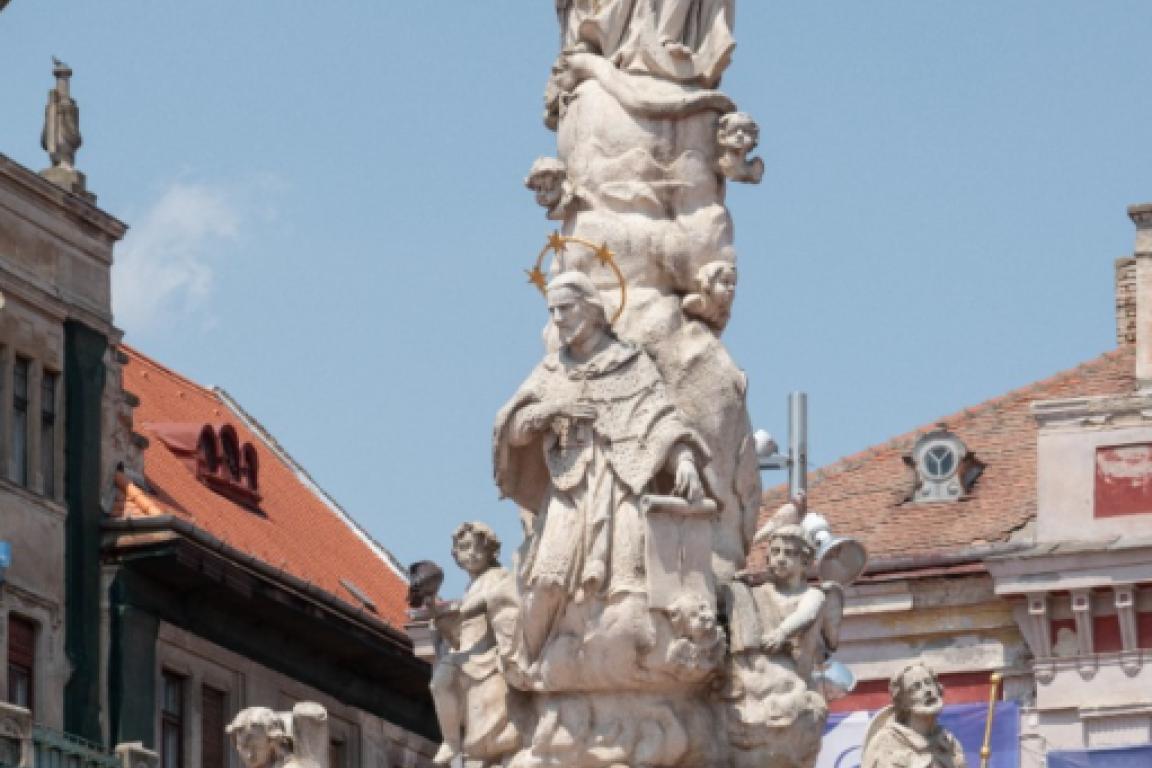
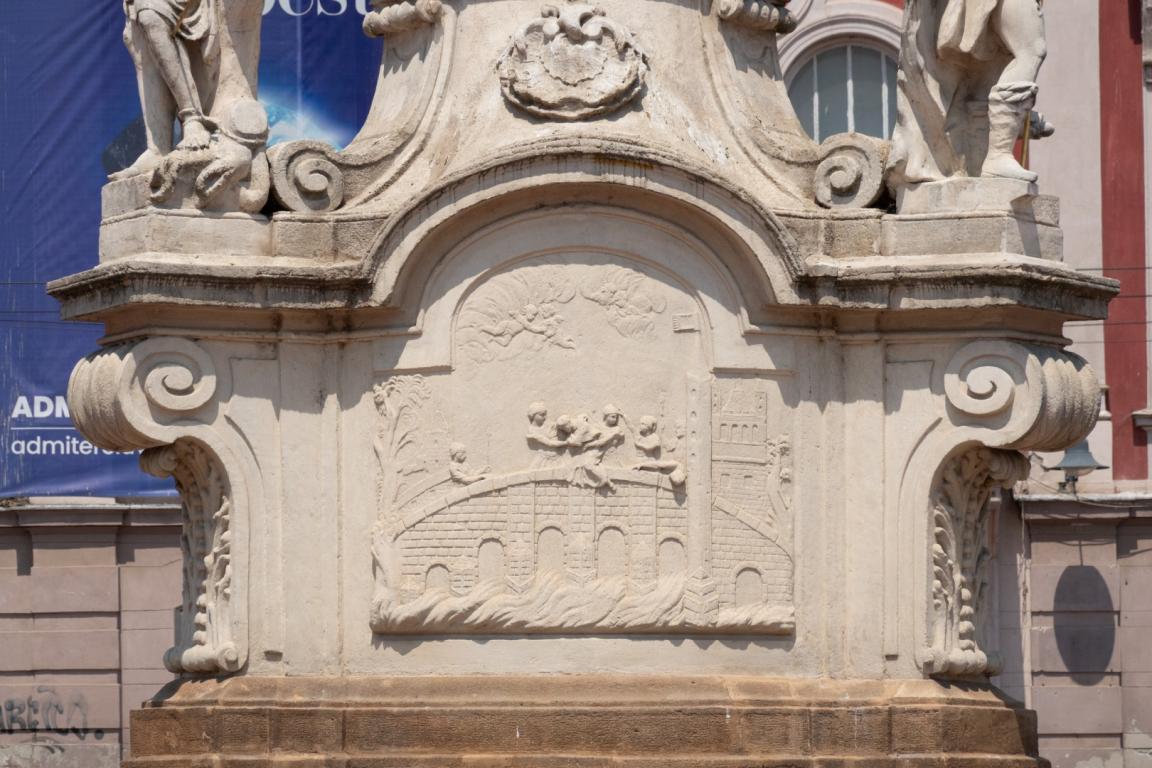
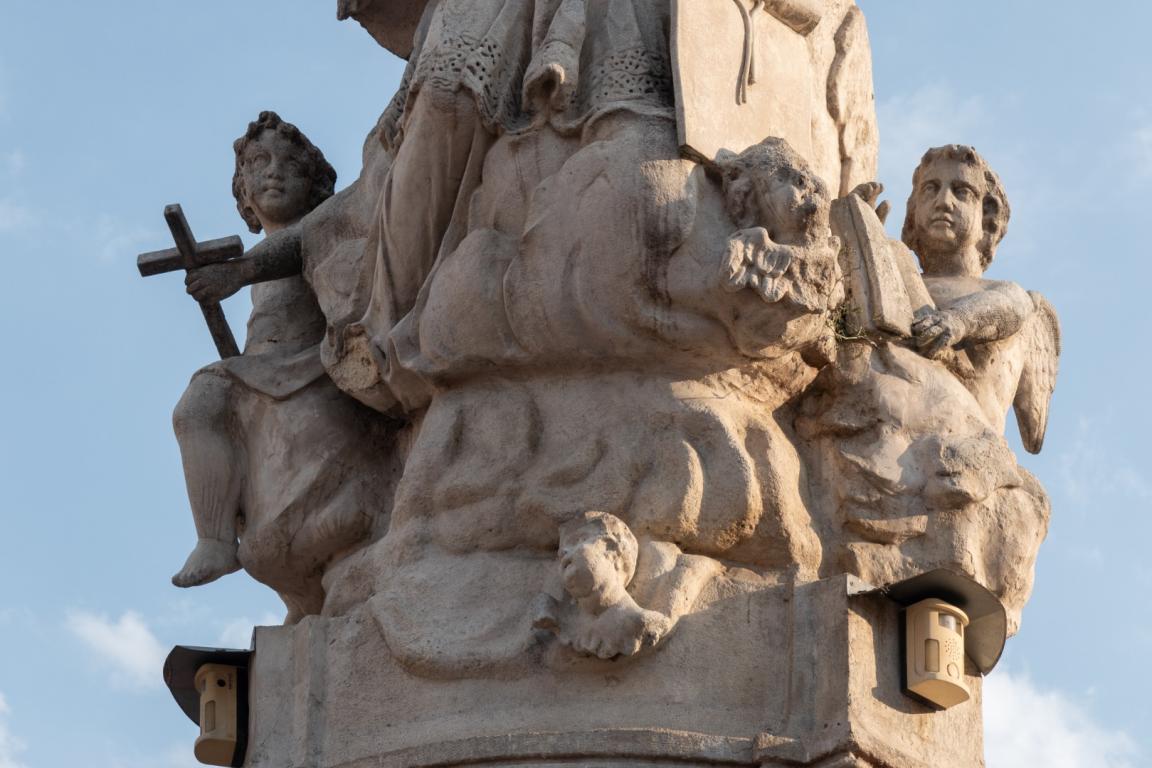
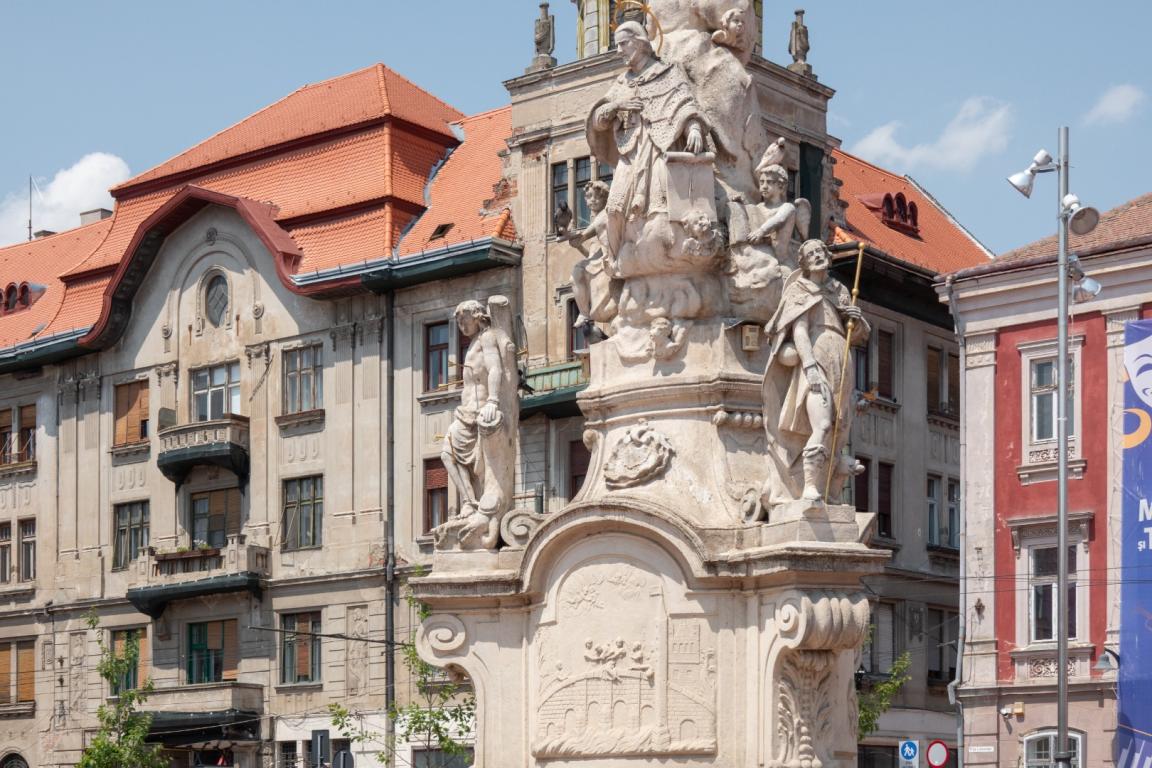
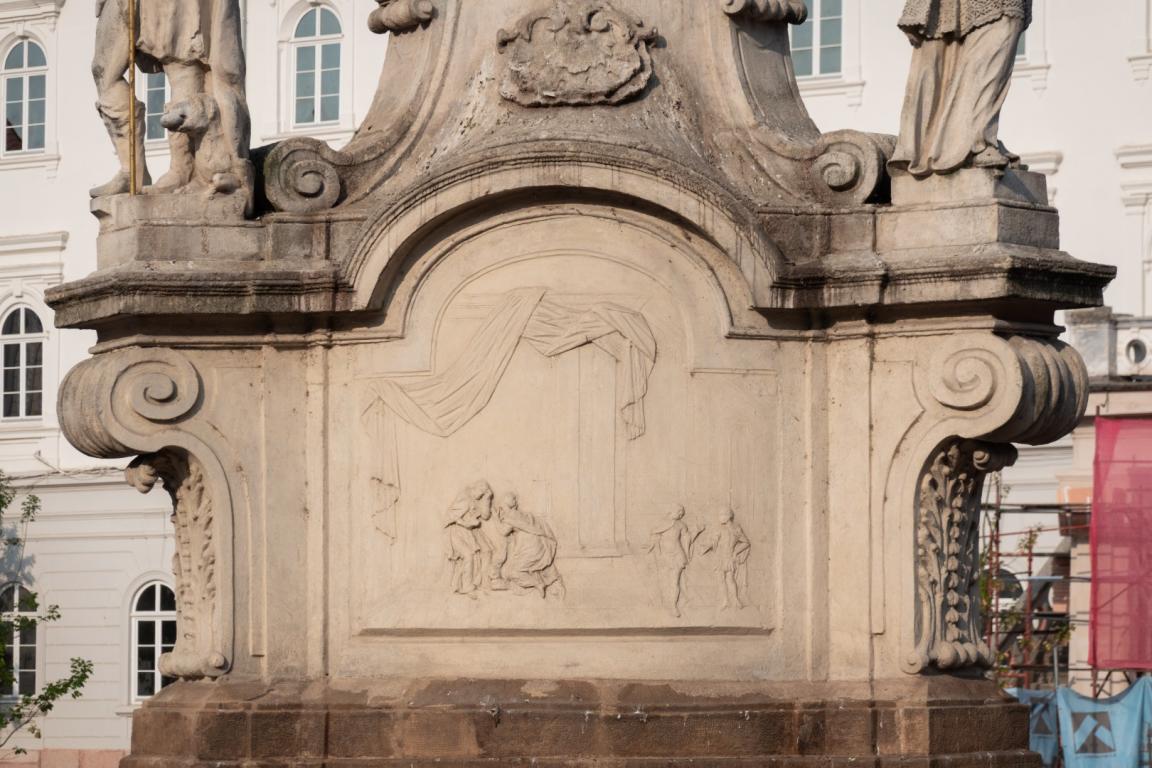
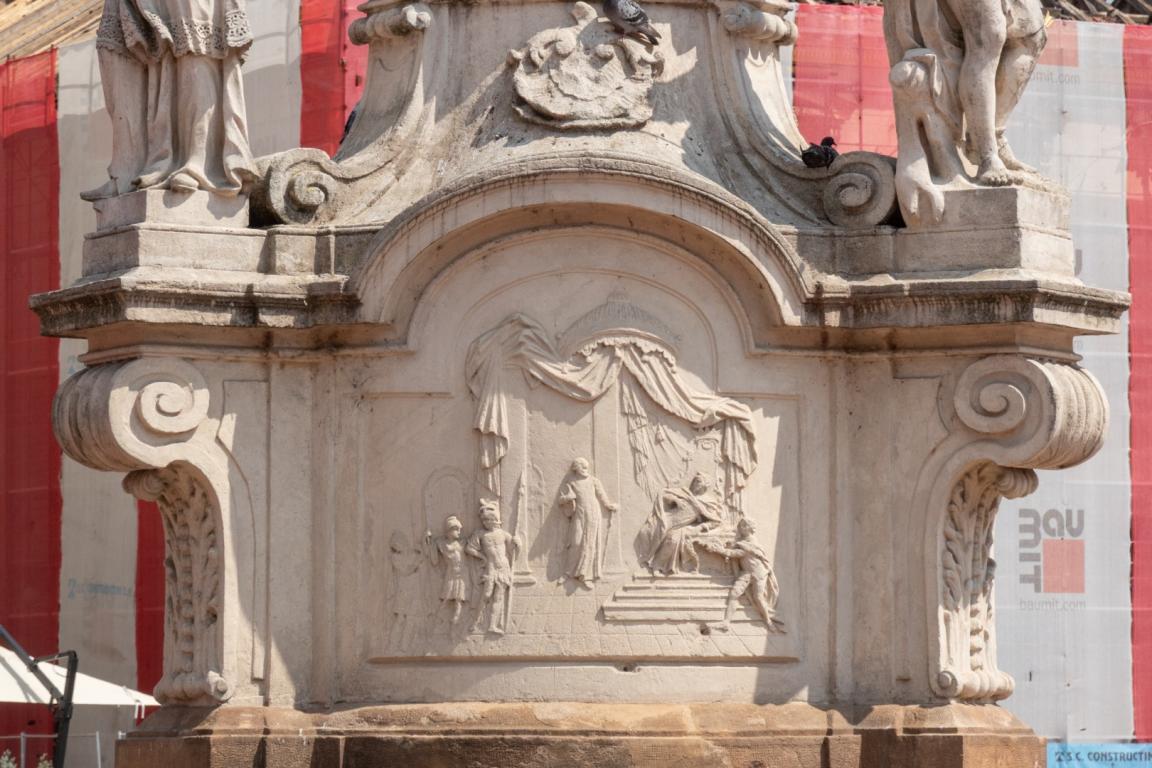
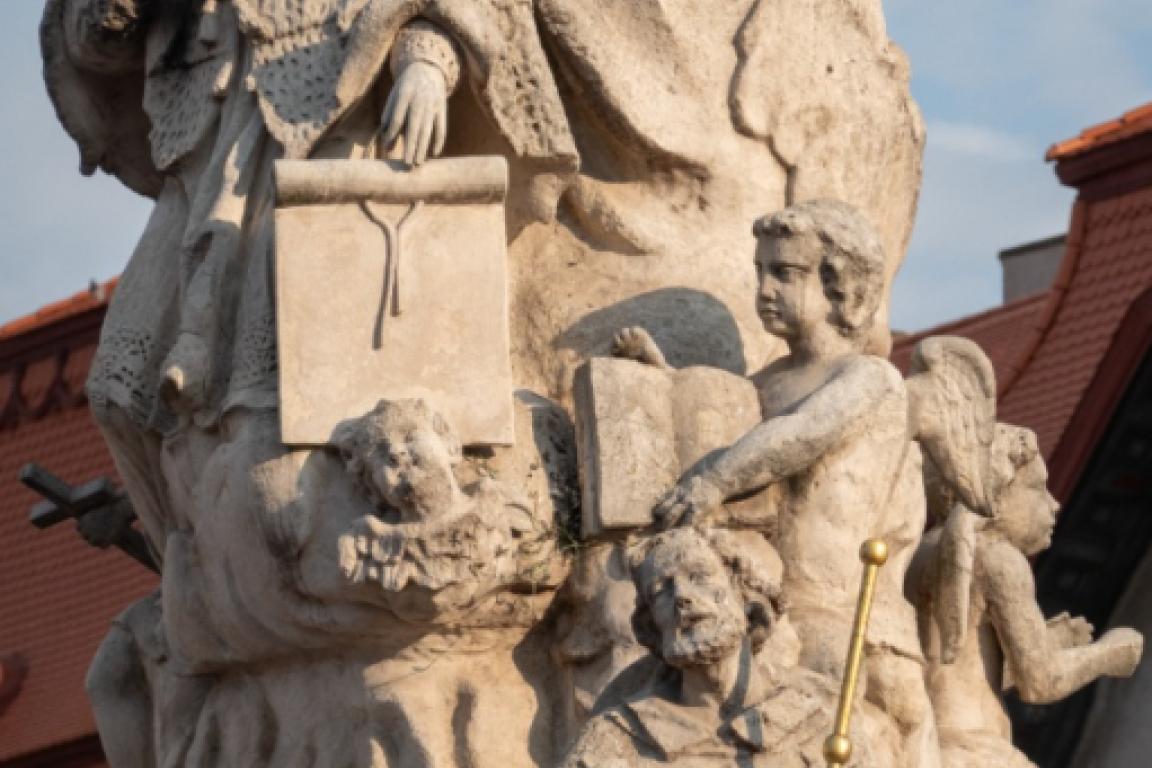
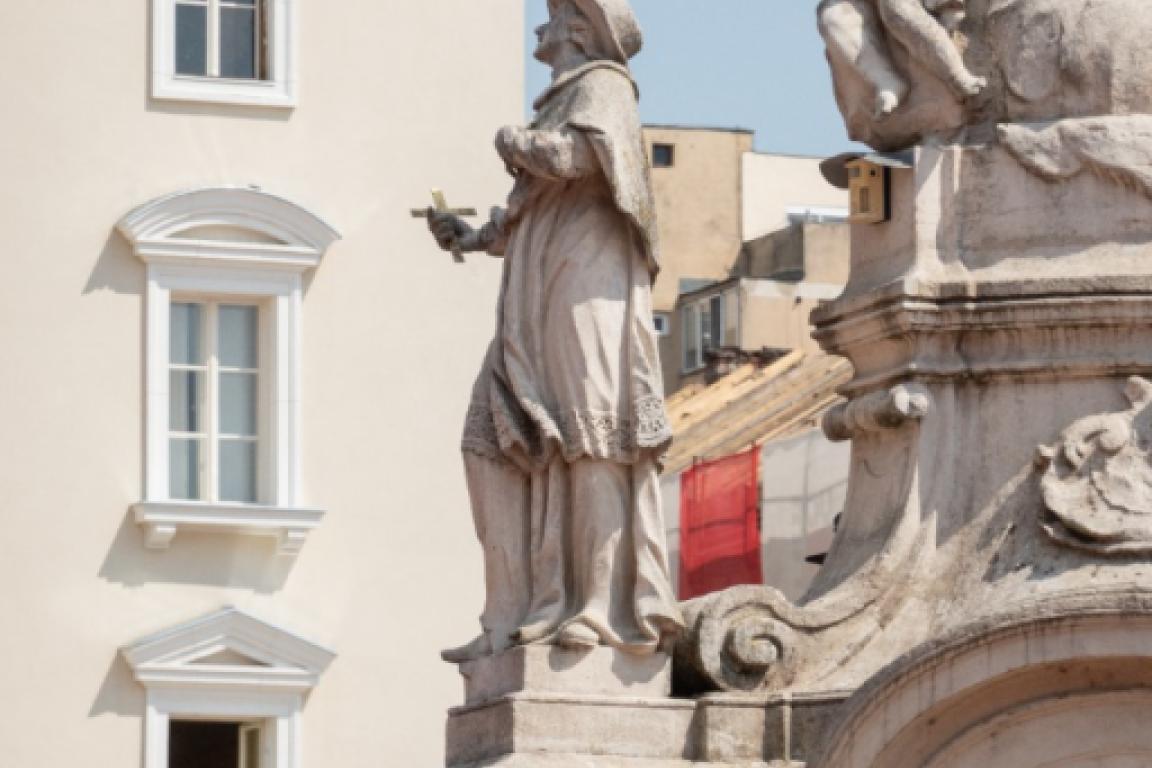
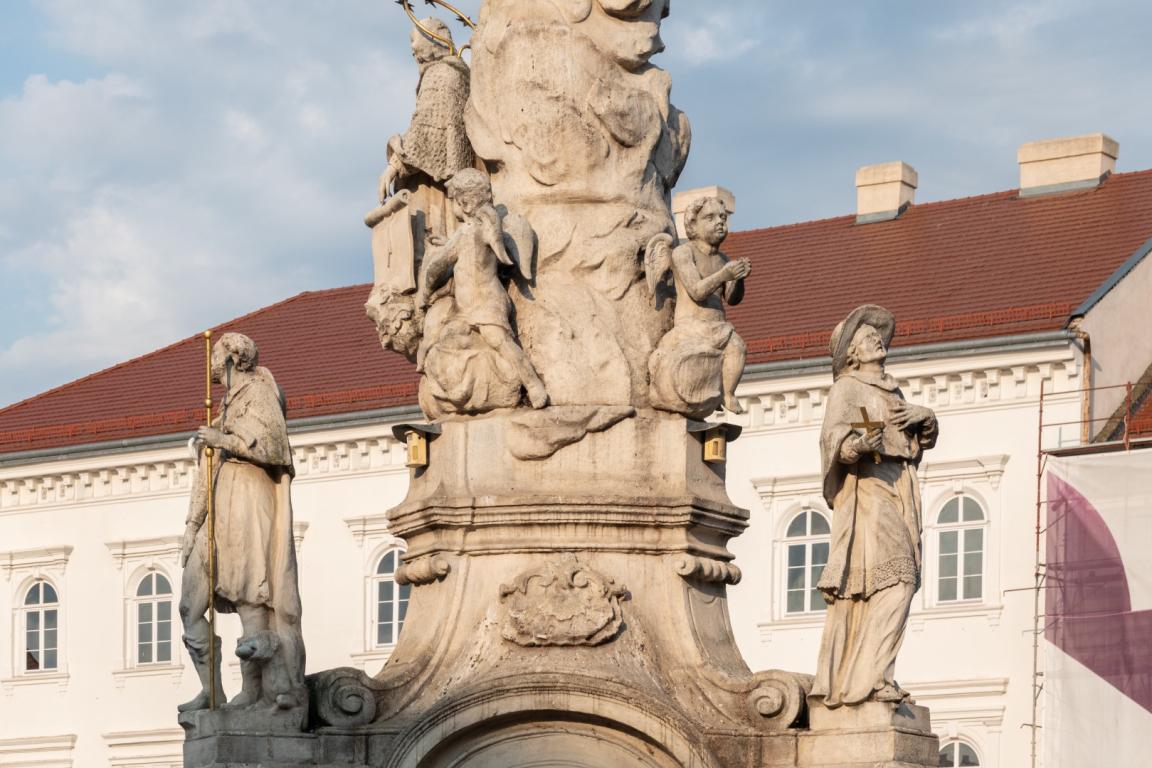
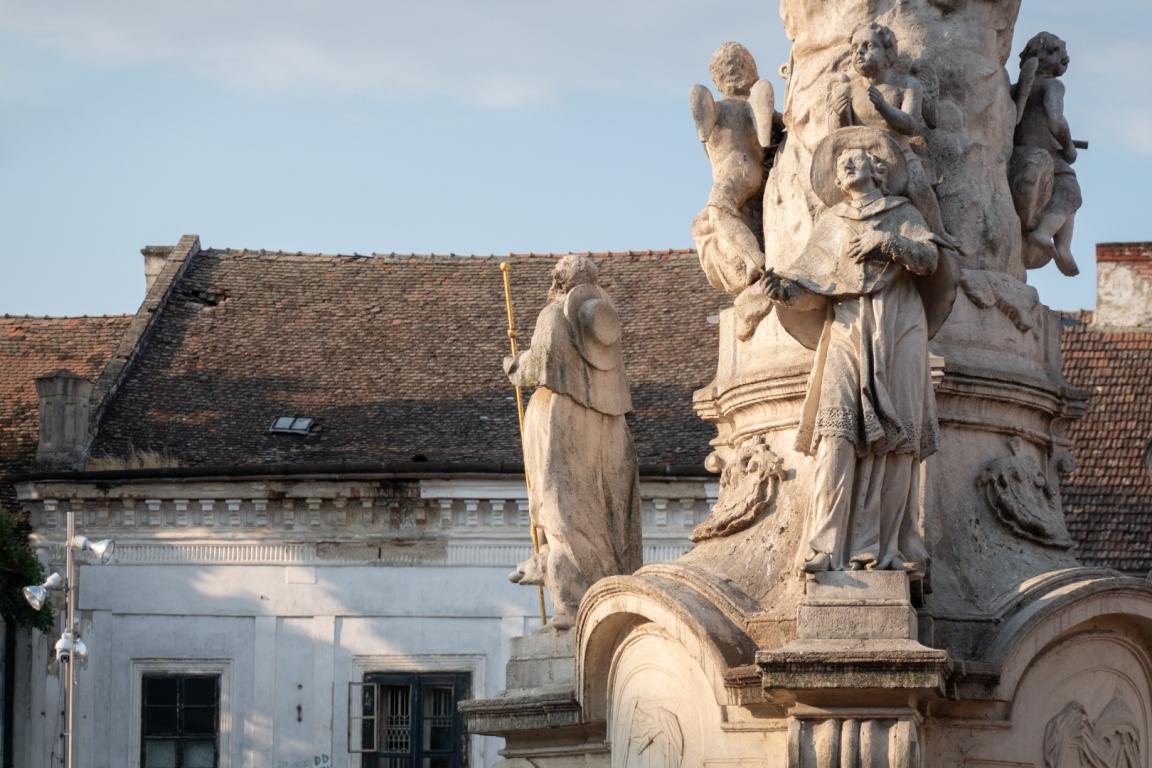
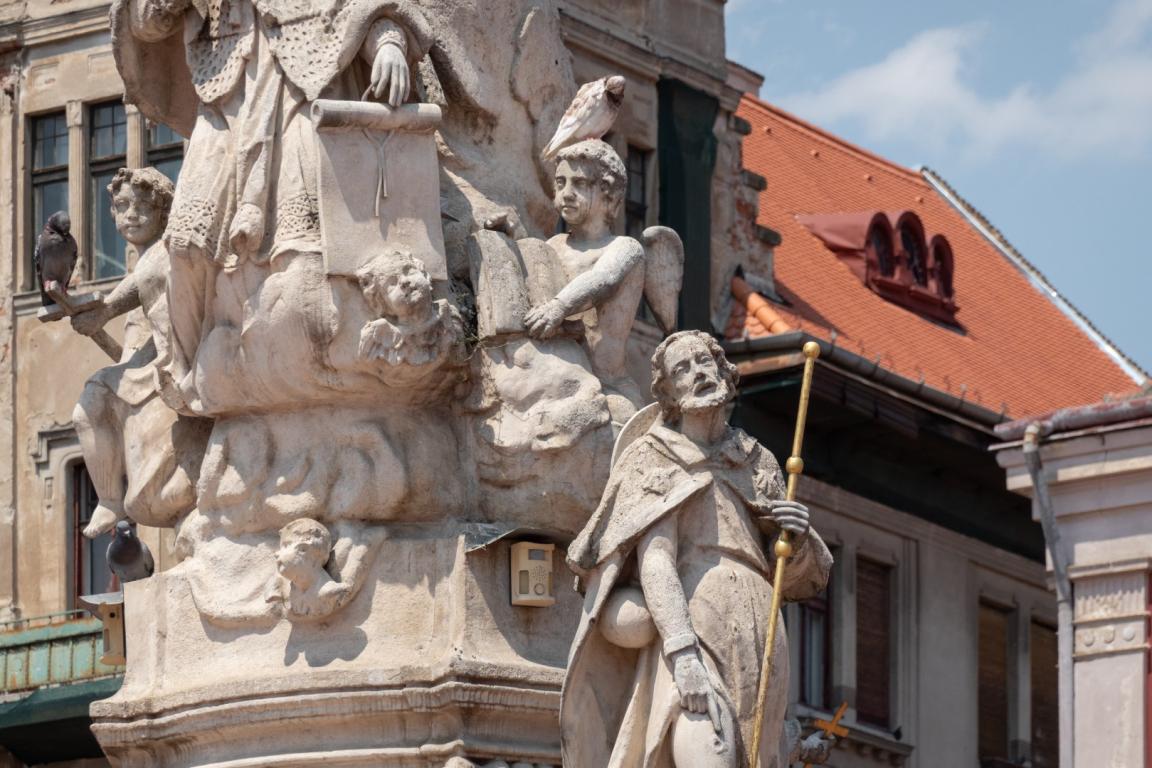
The monument is conceived as a complex Baroque composition, structured vertically in three registers. The base features three relief scenes from the life and martyrdom of Saint John of Nepomuk: the confession of the queen, his confrontation with King Wenceslas, and his execution by being thrown from Charles Bridge in Prague. Above these are the statues of the plague saints—Sebastian, Rochus, and Carlo Borromeo—invoked during times of epidemic and suffering.
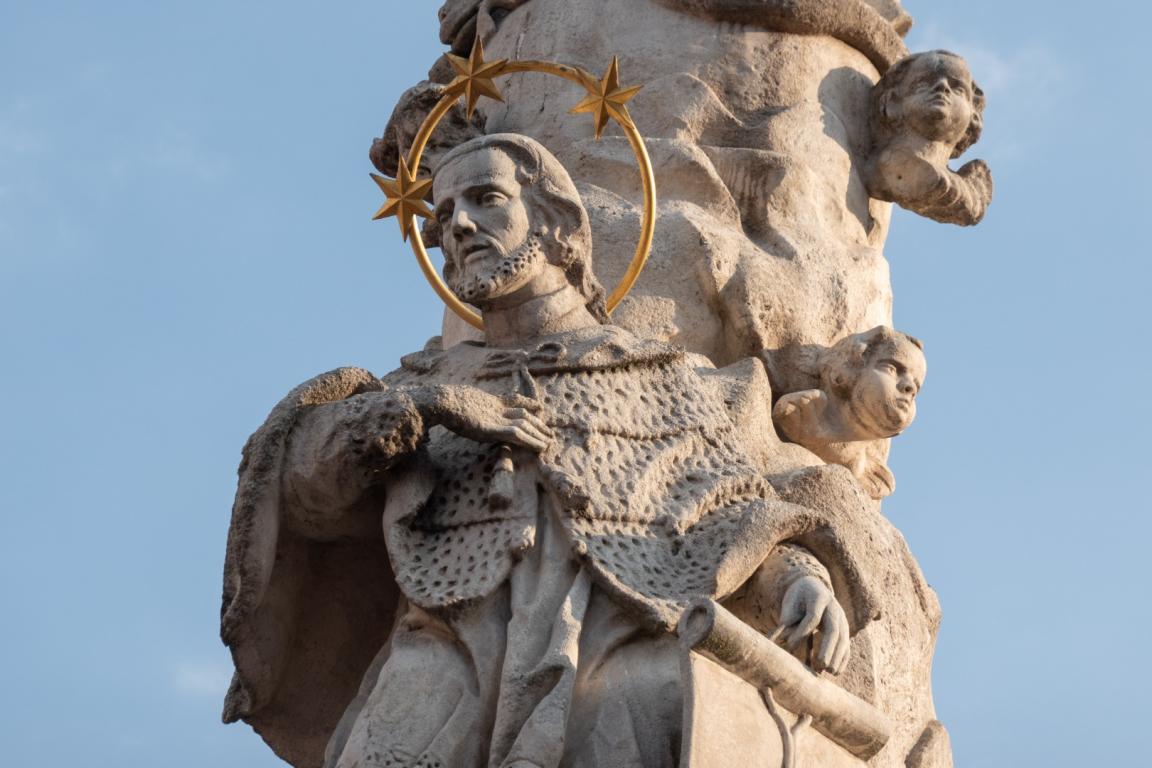
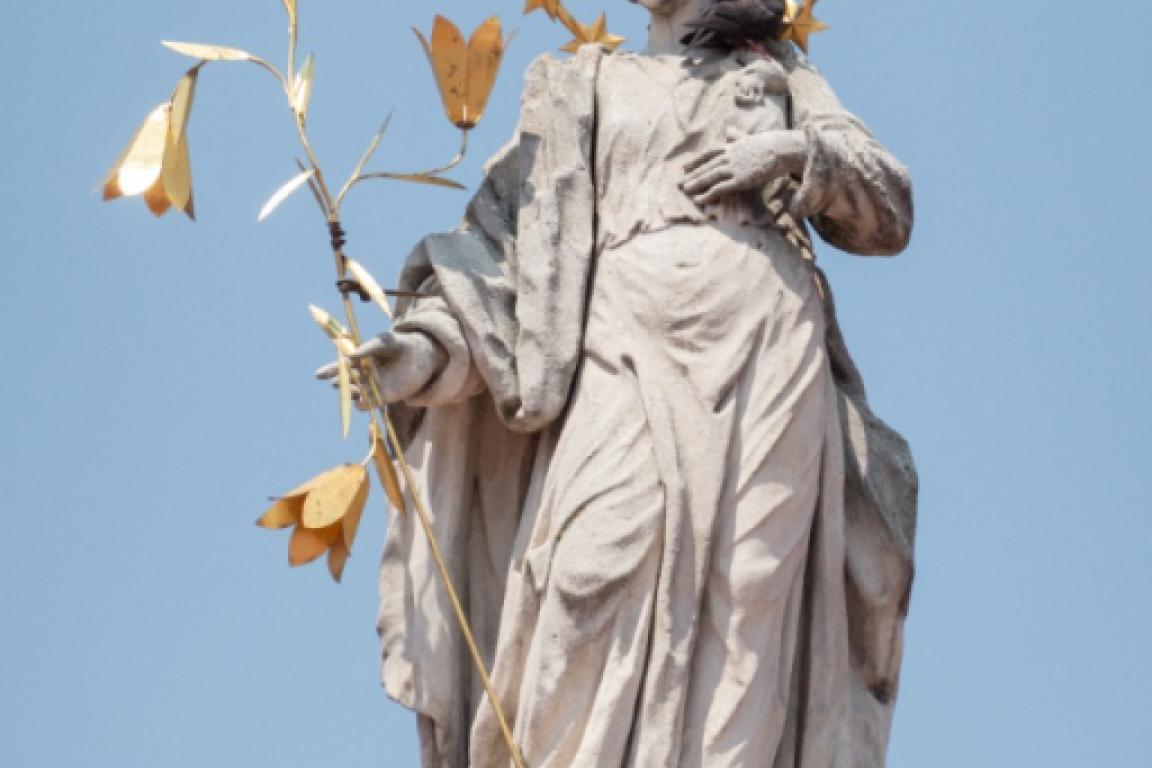
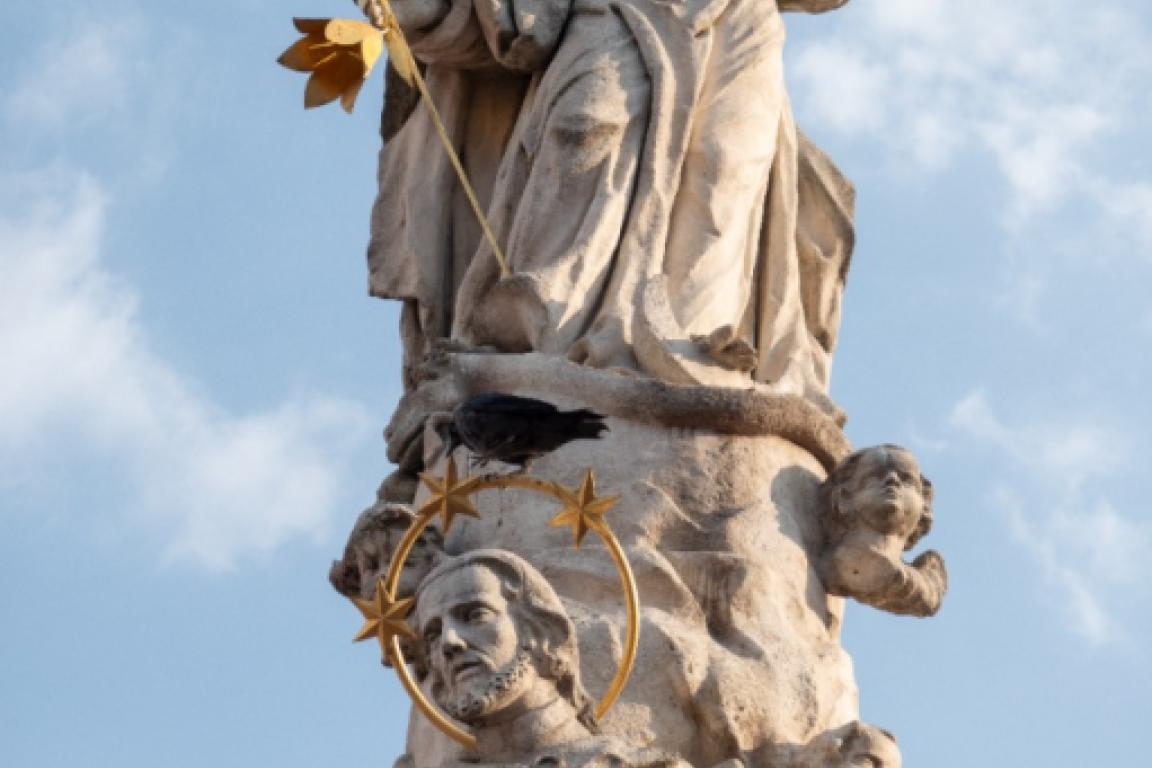
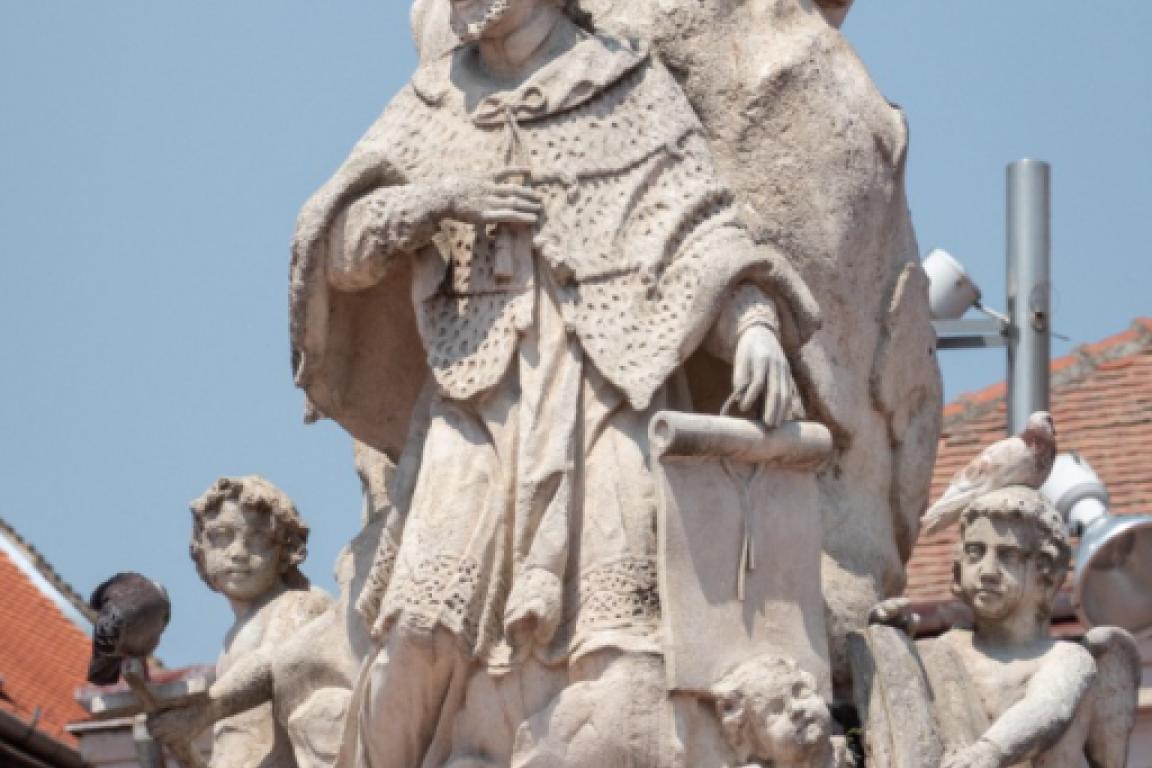
At the base of the column stands Saint John of Nepomuk, depicted in episcopal vestments, combining solemnity with the dynamic expressiveness typical of Central European Baroque. The composition is crowned by the figure of the Virgin Mary in her Immaculate Conception, wearing a crown of stars and holding a lily, the symbol of purity. Positioned above the globe and trampling the serpent, Mary appears here not only as an image of purity, but also as a sign of protection and victory—a message that, in the context of 18th-century Banat, can be linked both to the overcoming of the plague and to the reintegration of the province into the Christian and Habsburg world after the Ottoman period.
Through its iconography and placement, the monument goes beyond a purely devotional function, also acting as a visual instrument for the affirmation of Catholicism and imperial authority. In this sense, it reflects the circulation of artistic models from Central Europe and the integration of Timișoara into a broader cultural network shaped by Viennese Baroque.
In the early 19th century, the original monument was incorporated into a larger, neoclassical ensemble. In 1852, it was dismantled to make way for the Column of Fidelity and relocated near the Transylvania Gate, in front of the barracks. After nearly a century, around 1969–1970 (or 1971, according to other sources), the monument was returned to Liberty Square, to its original location.
The ensemble was severely damaged during the December 1989 Revolution and later restored in 1992–1993, as well as again in 2015. Today, the monument remains one of the most valuable landmarks of Baroque Timișoara.