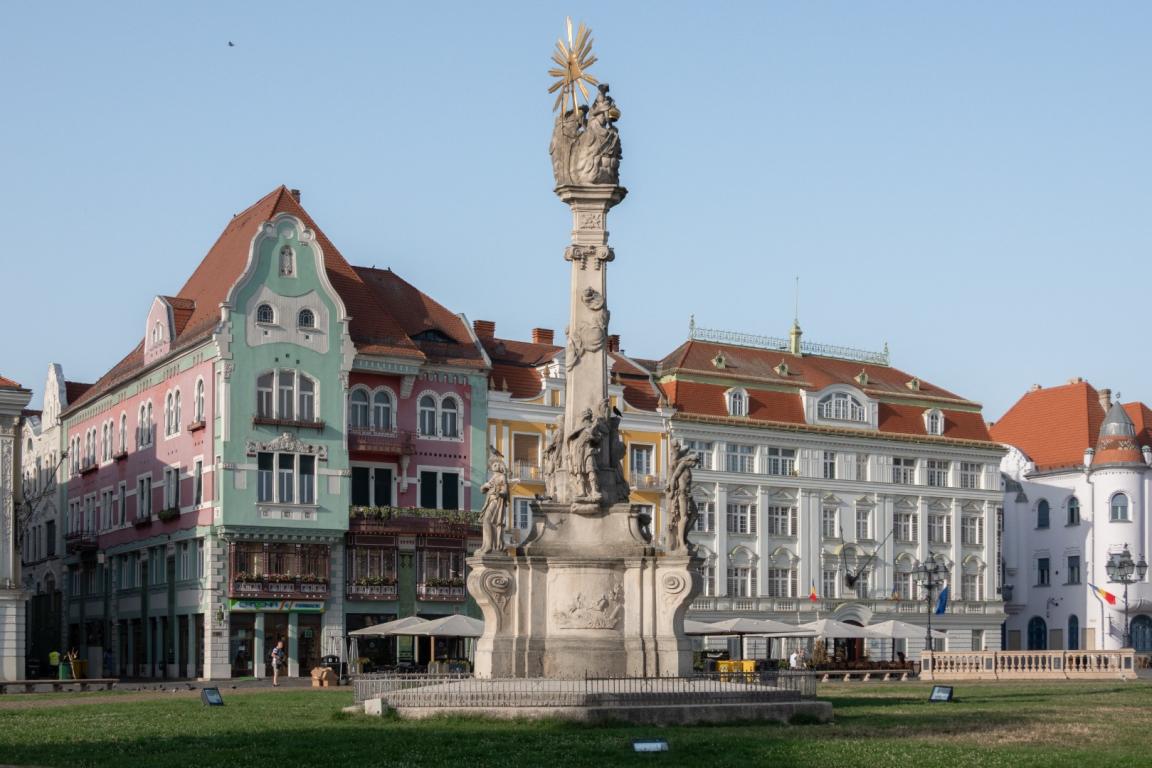
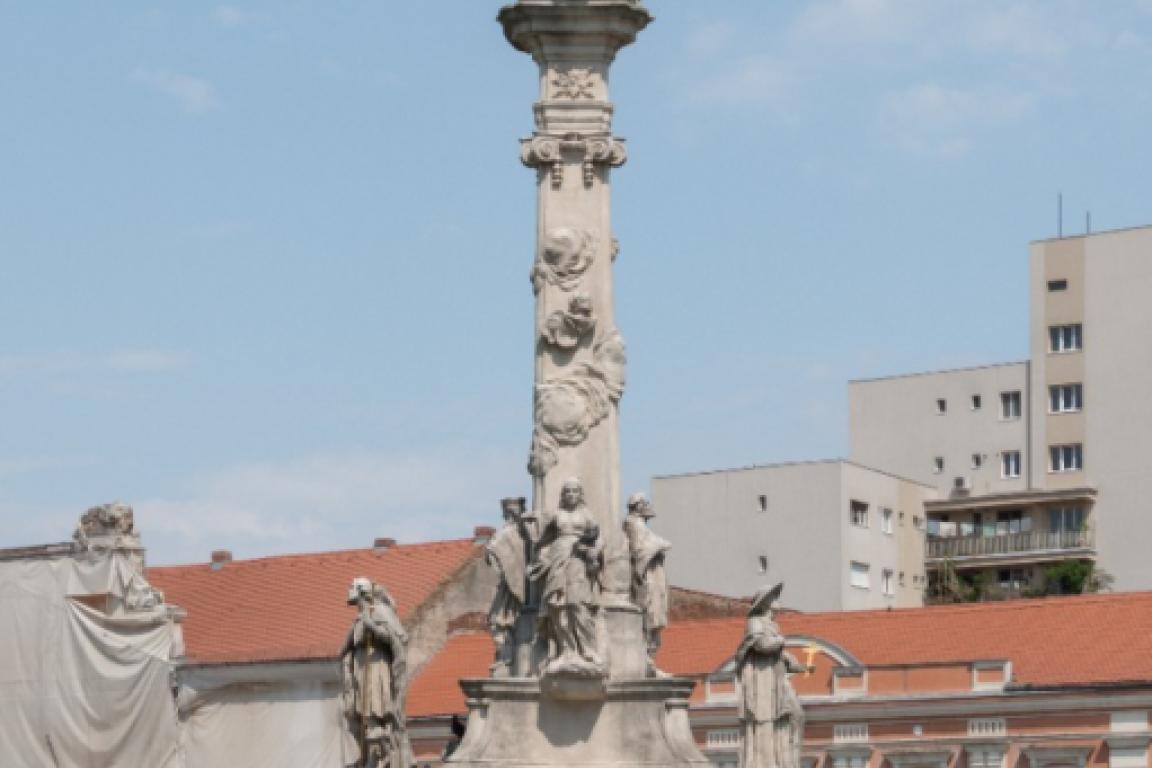
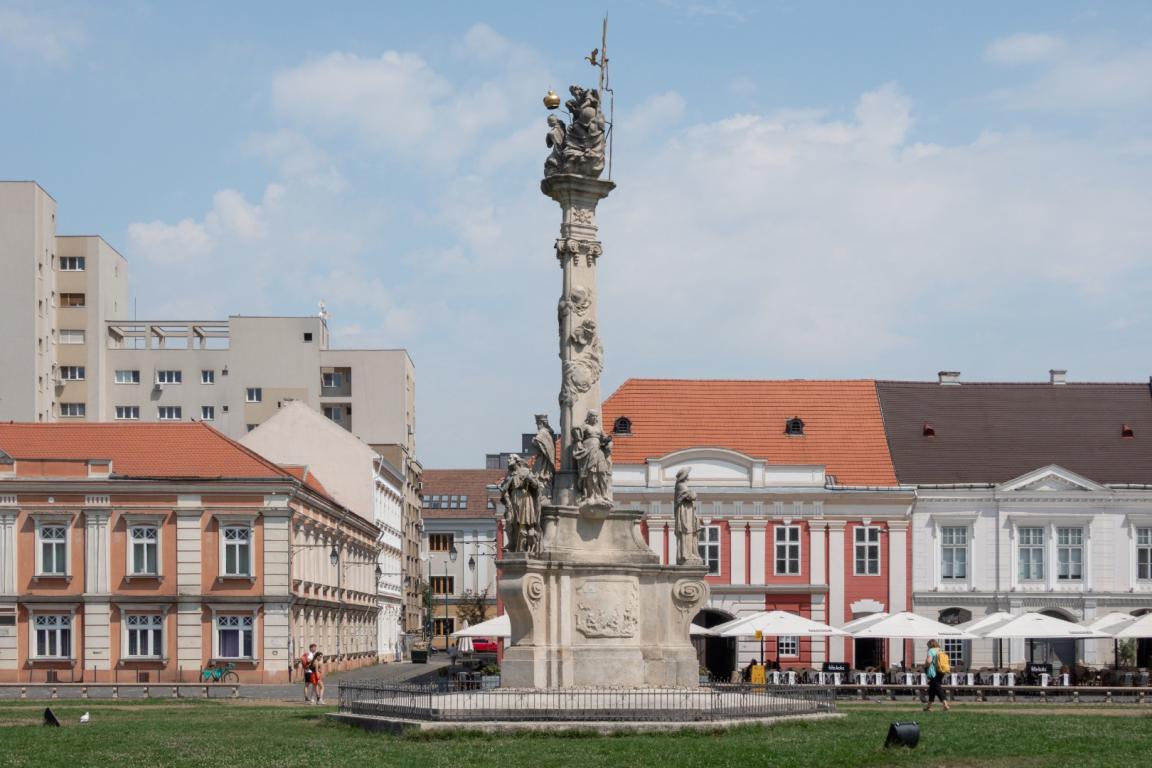
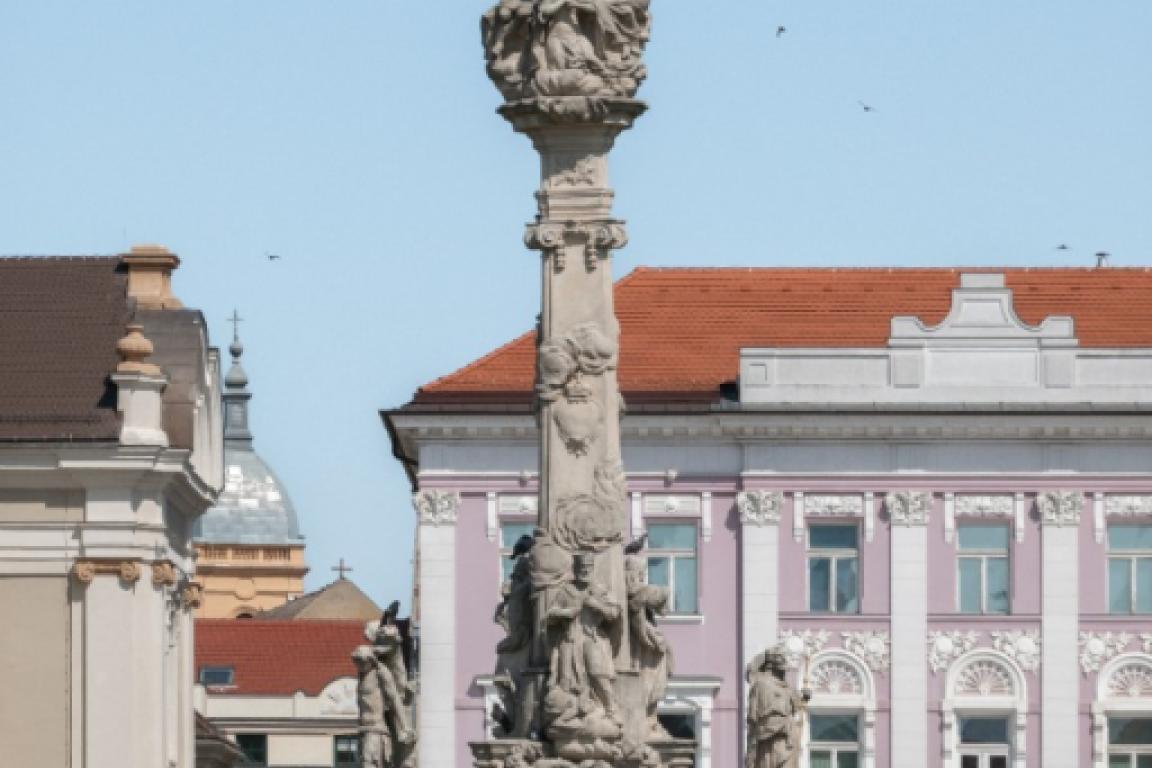
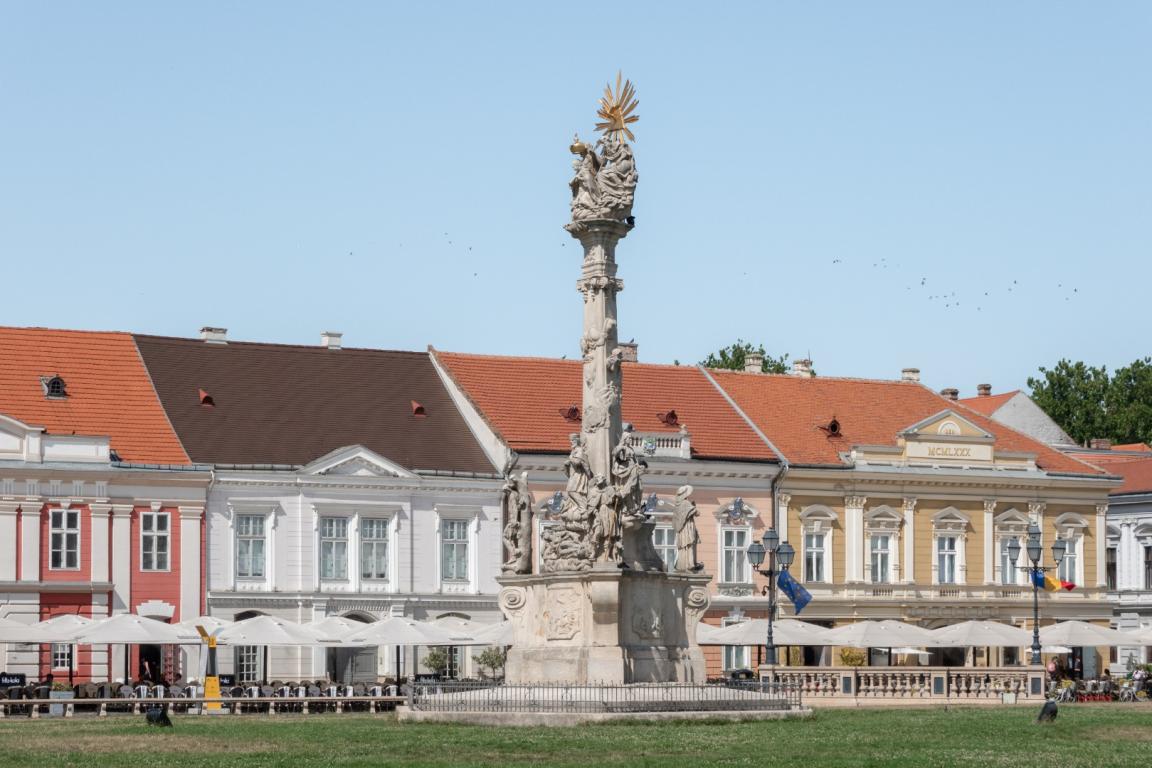
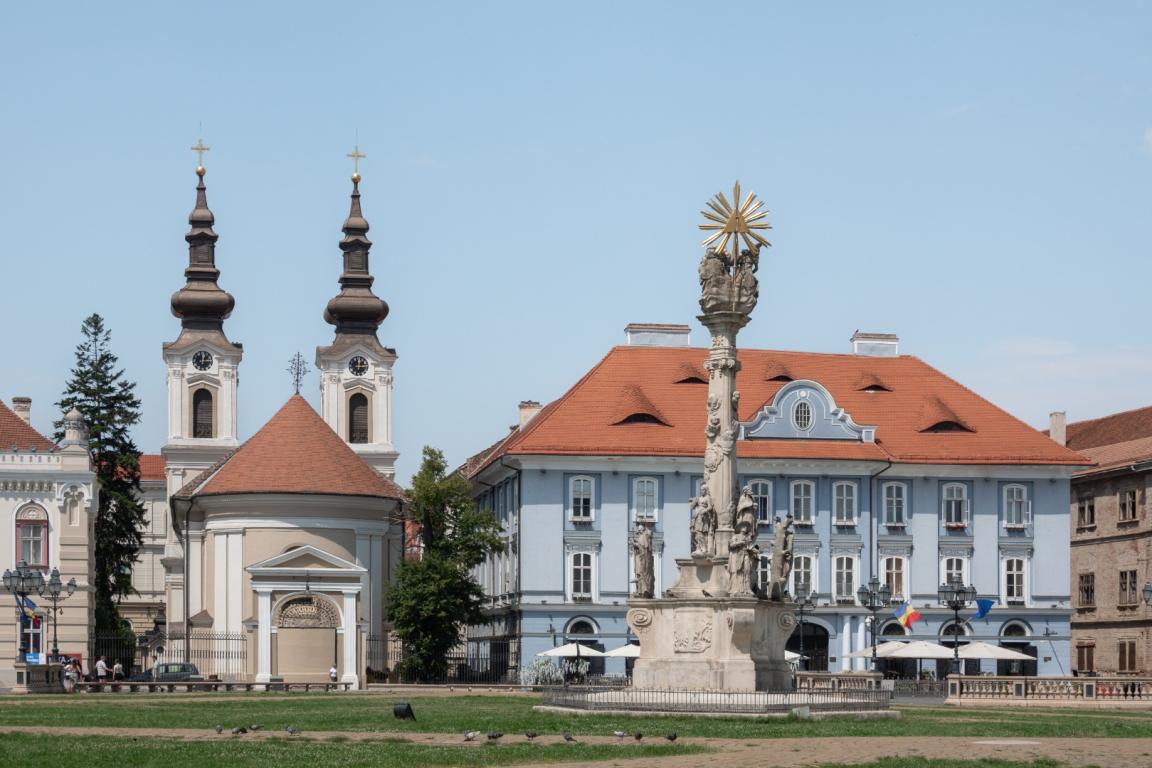
The Holy Trinity Column in Union Square, also known as the Plague Column, was erected in gratitude for the end of the plague epidemic of 1738–1739, which had broken out during the Russo-Austrian war against the Ottomans. It was financed by Johann Anton Deschan von Hansen, an administrative councilor of the Provincial Administration, and executed in Vienna within the imposed six-month term, after which it was transported by water to Timișoara. Most likely, it was initially erected near the Transylvania Gate, with its foundation stone laid on November 21, 1740. After Deschan von Hansen’s property was alienated in 1742, the column was dismantled and is said to have broken in two, requiring its first restoration when it was re-erected in 1755. In 1790, the Roman Catholic bishop was once again forced to appeal to the city magistrates for the maintenance and protection of the monument, given the deplorable condition it had reached.
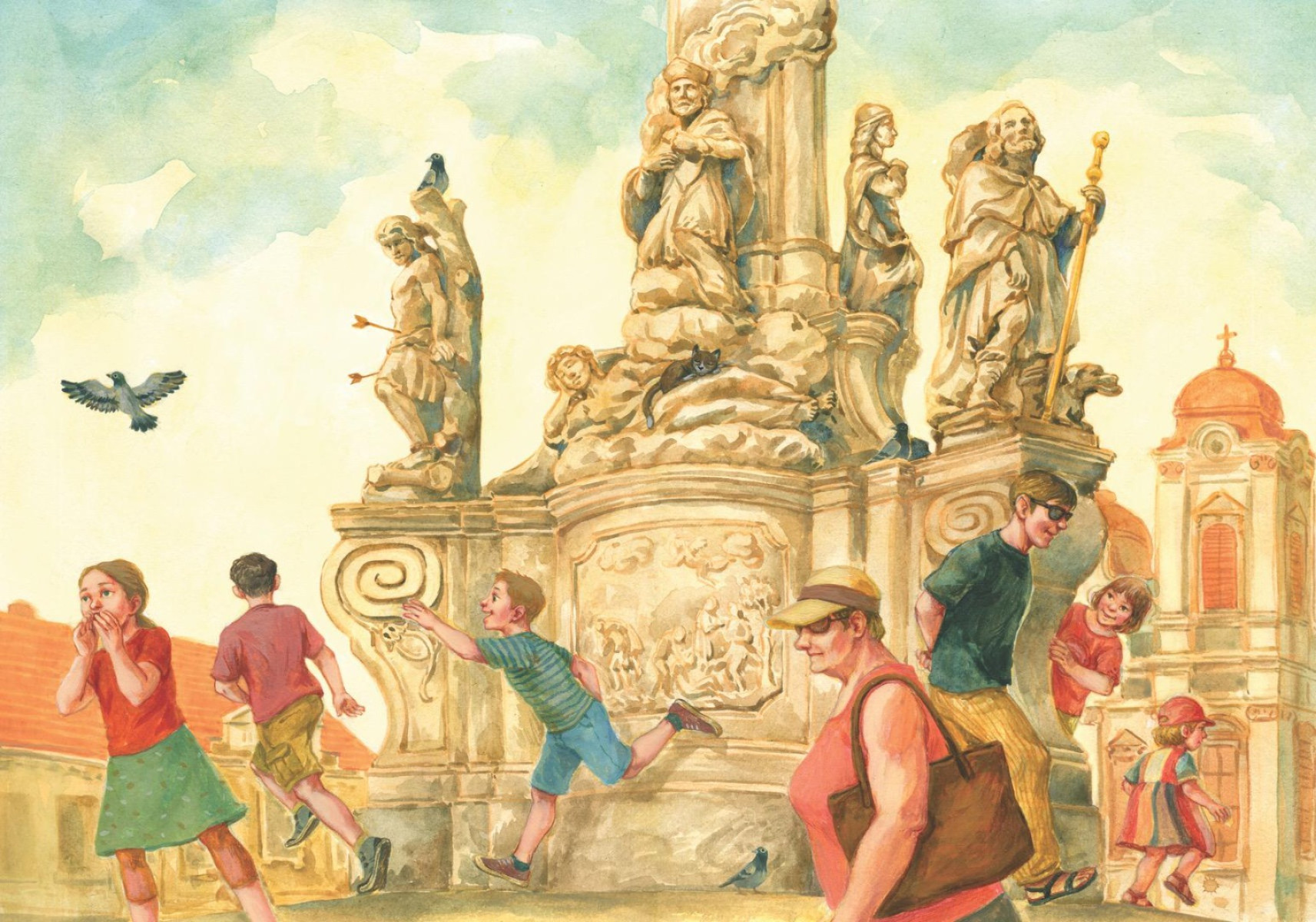
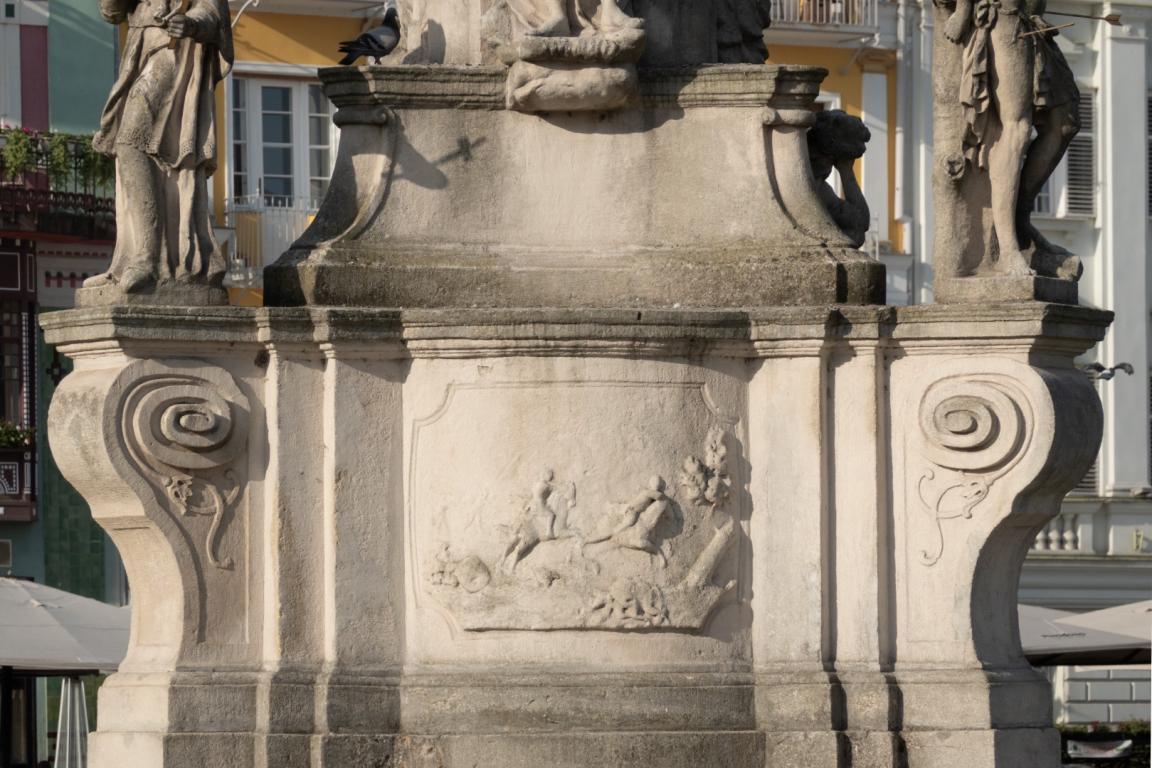
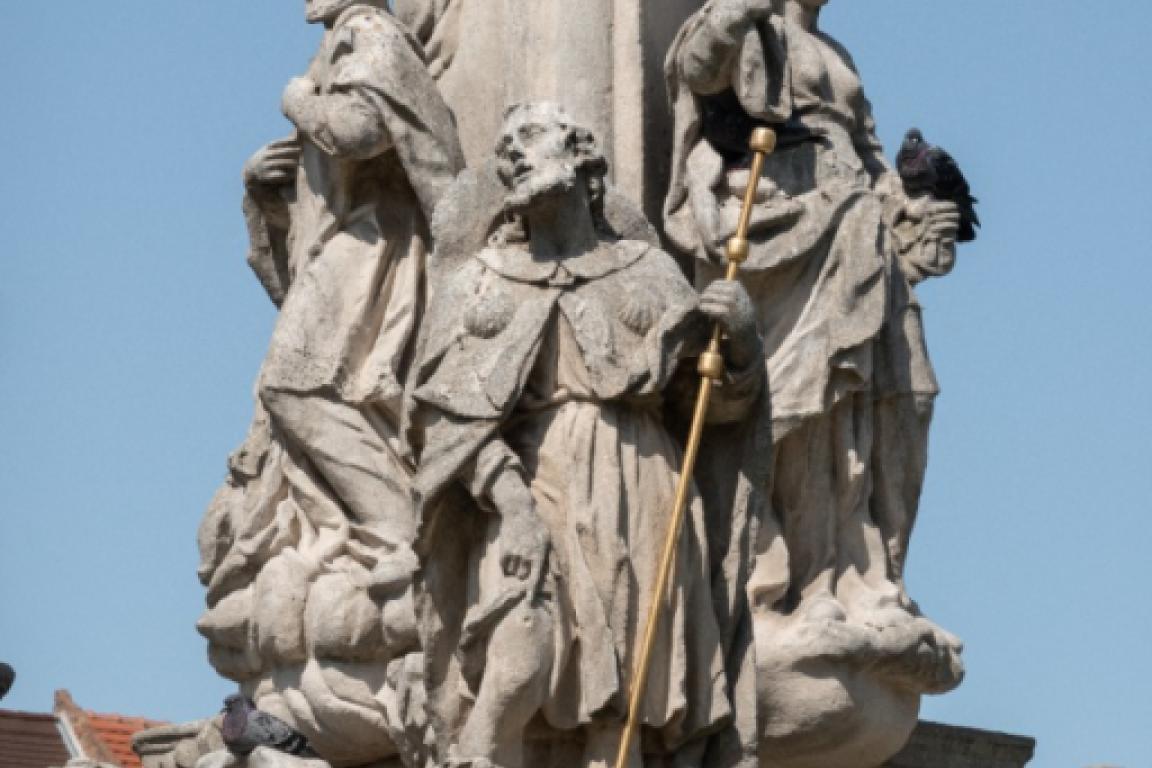
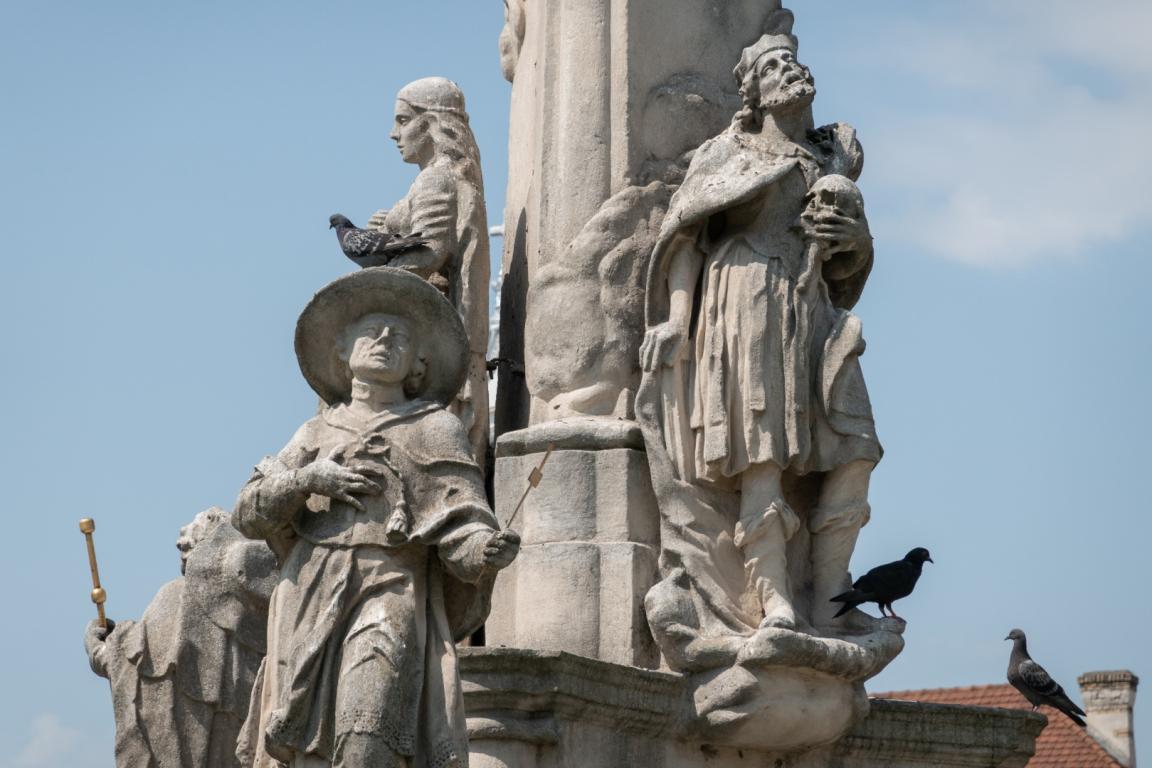
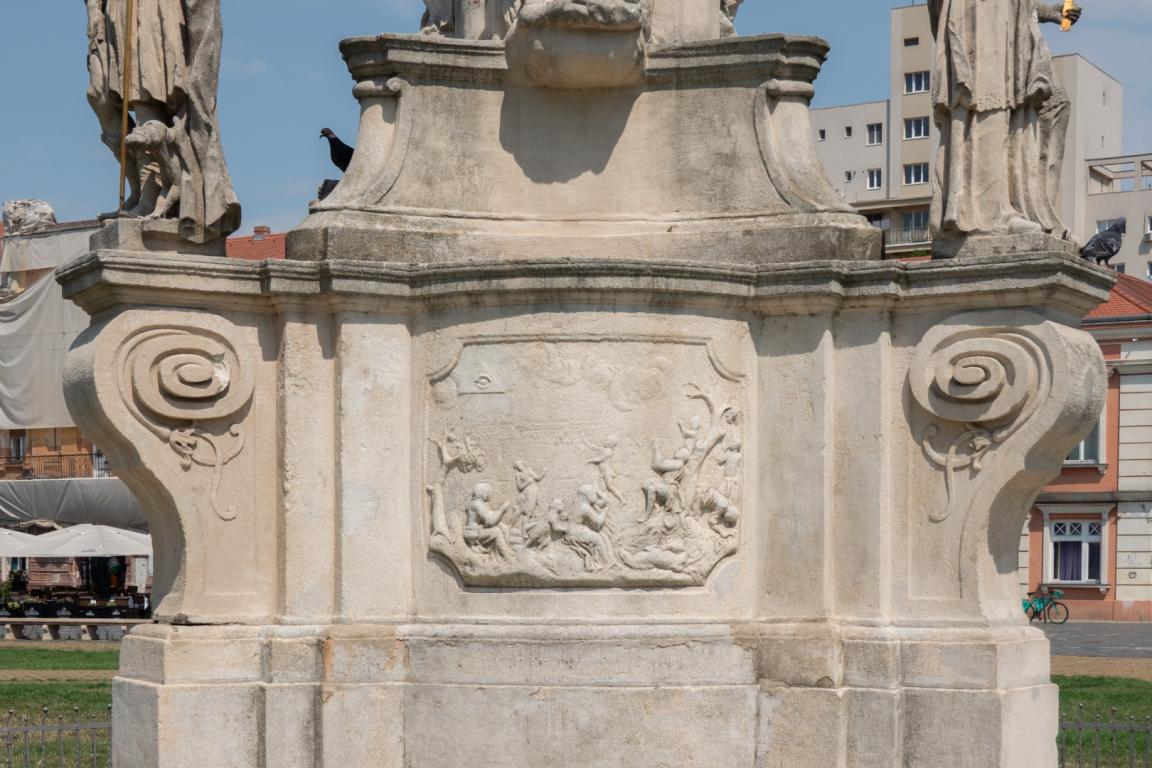
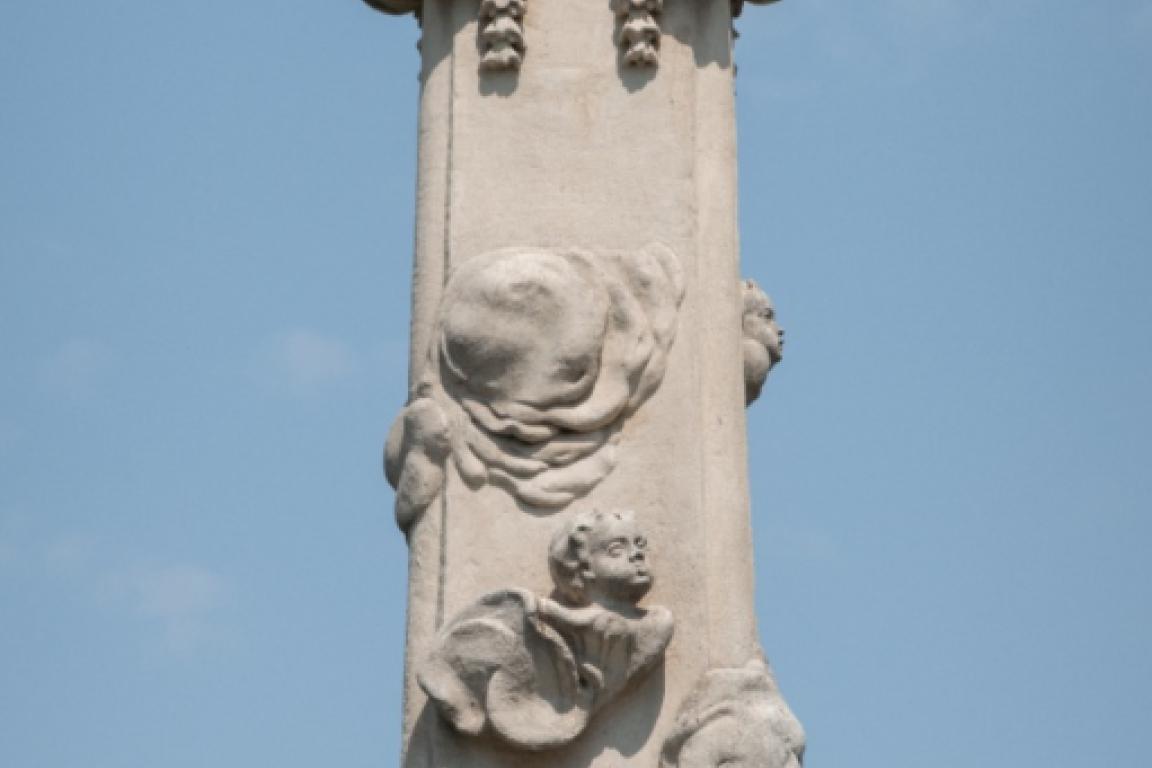
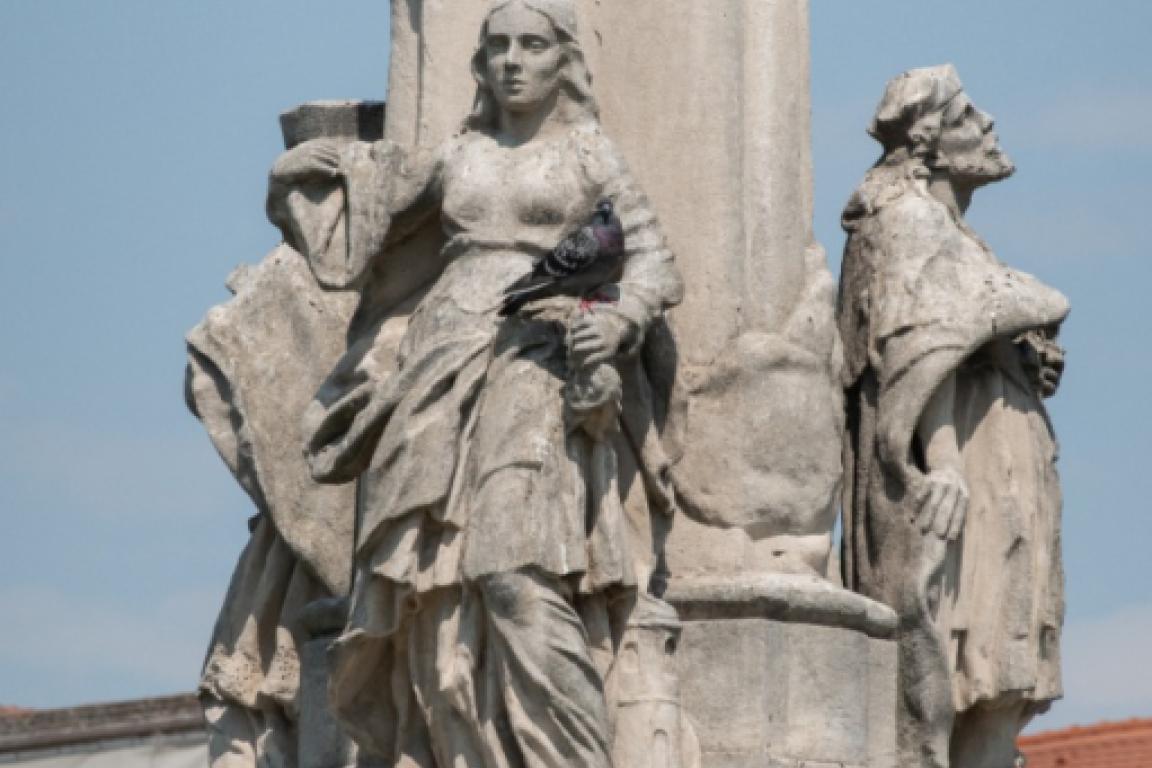
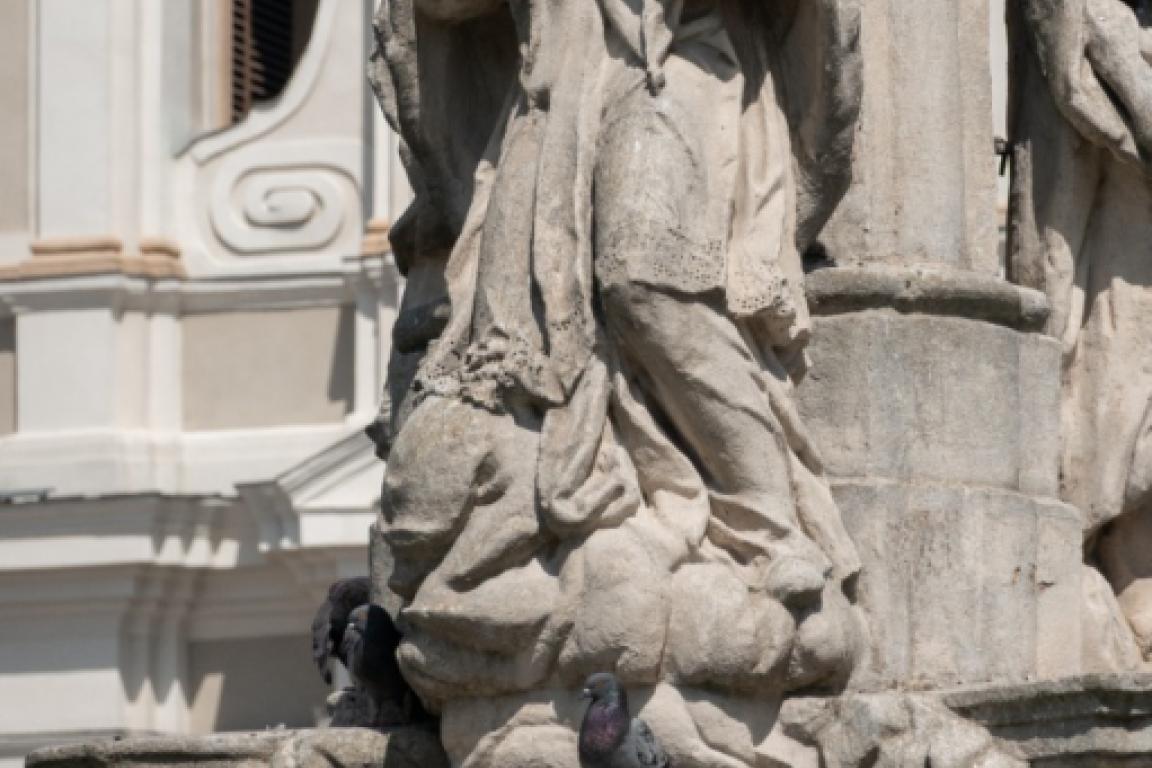
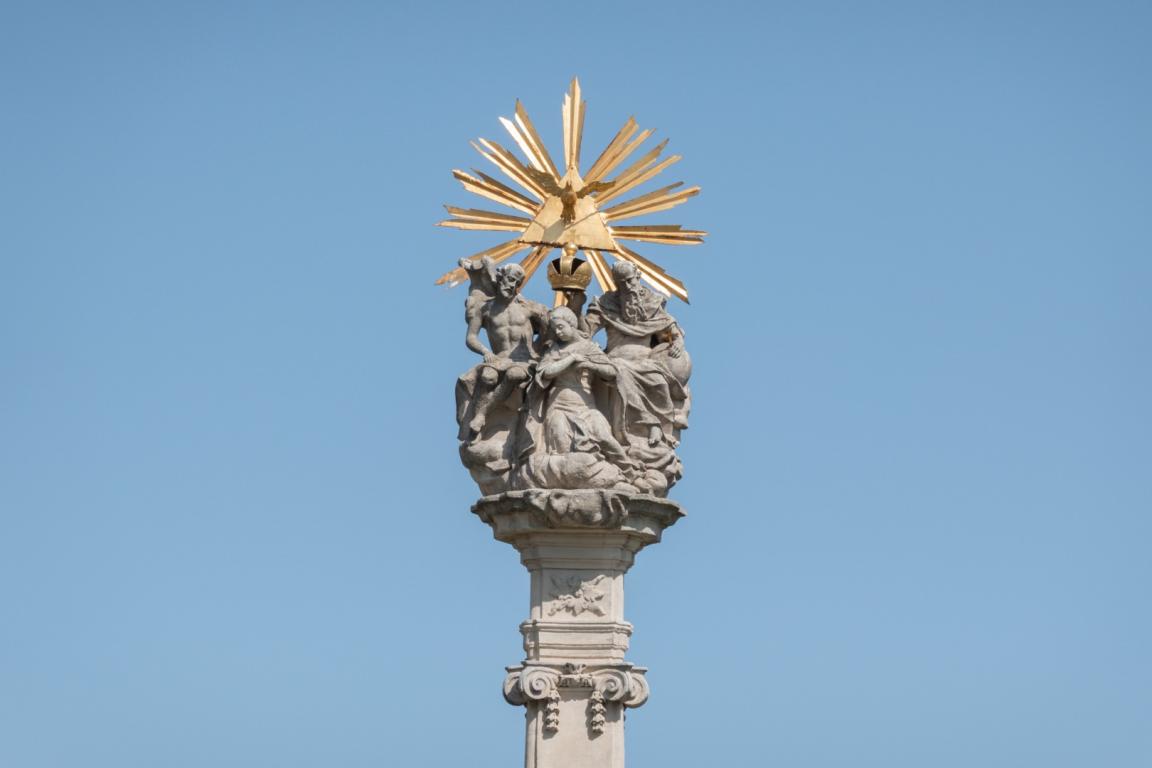
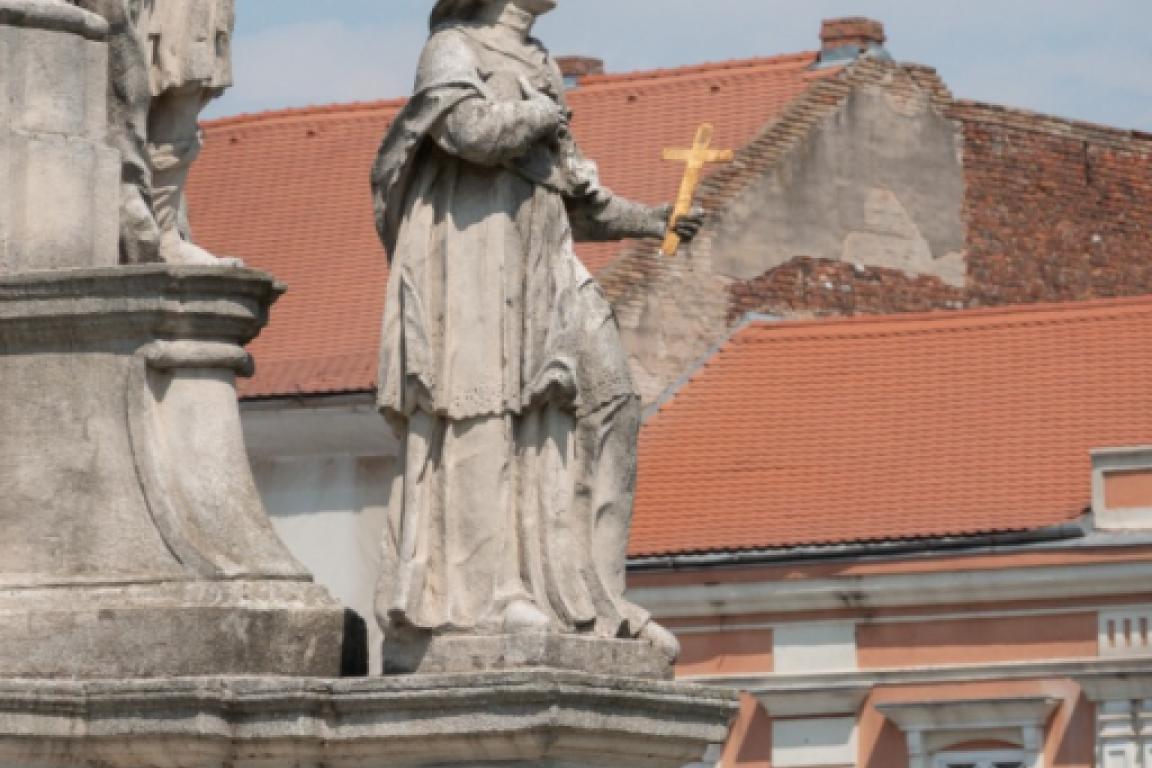
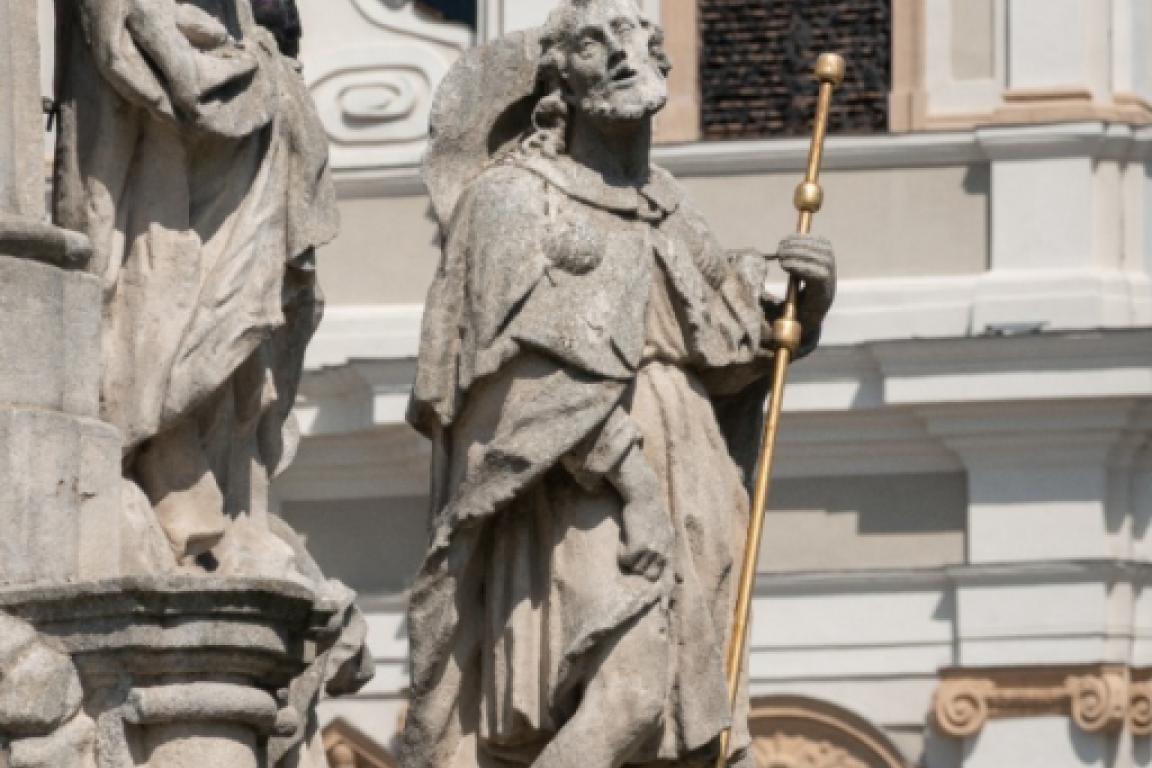
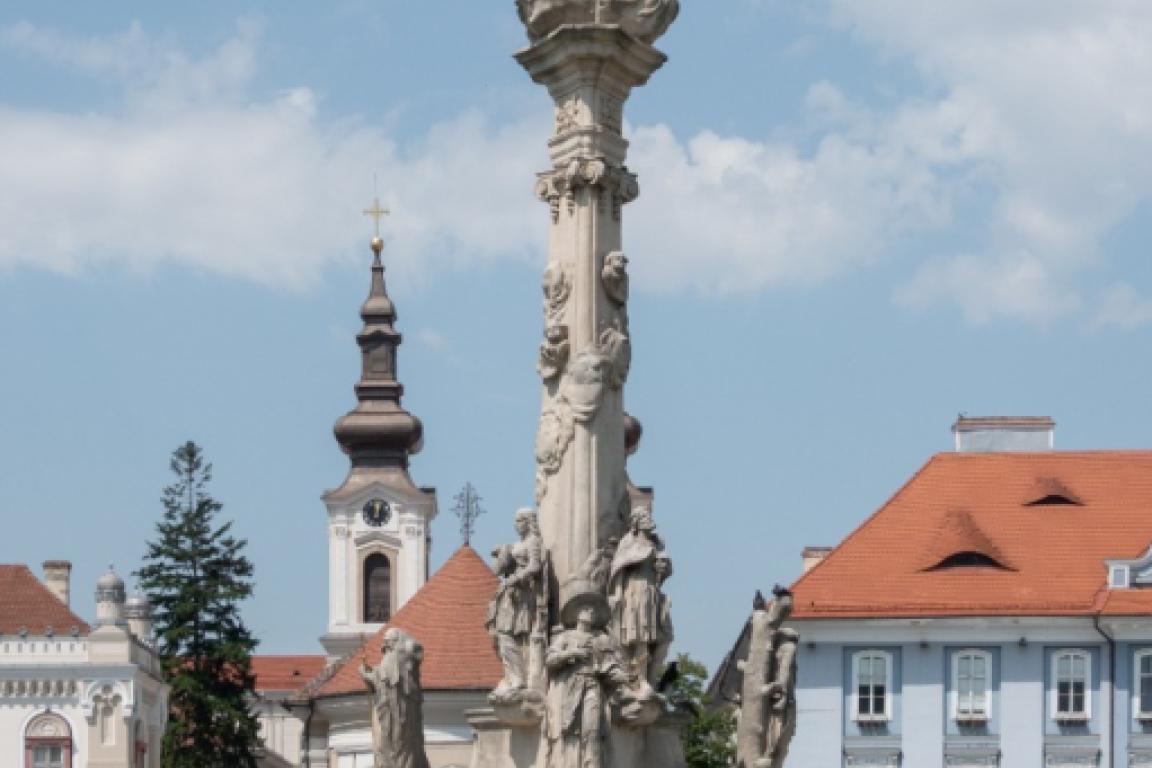
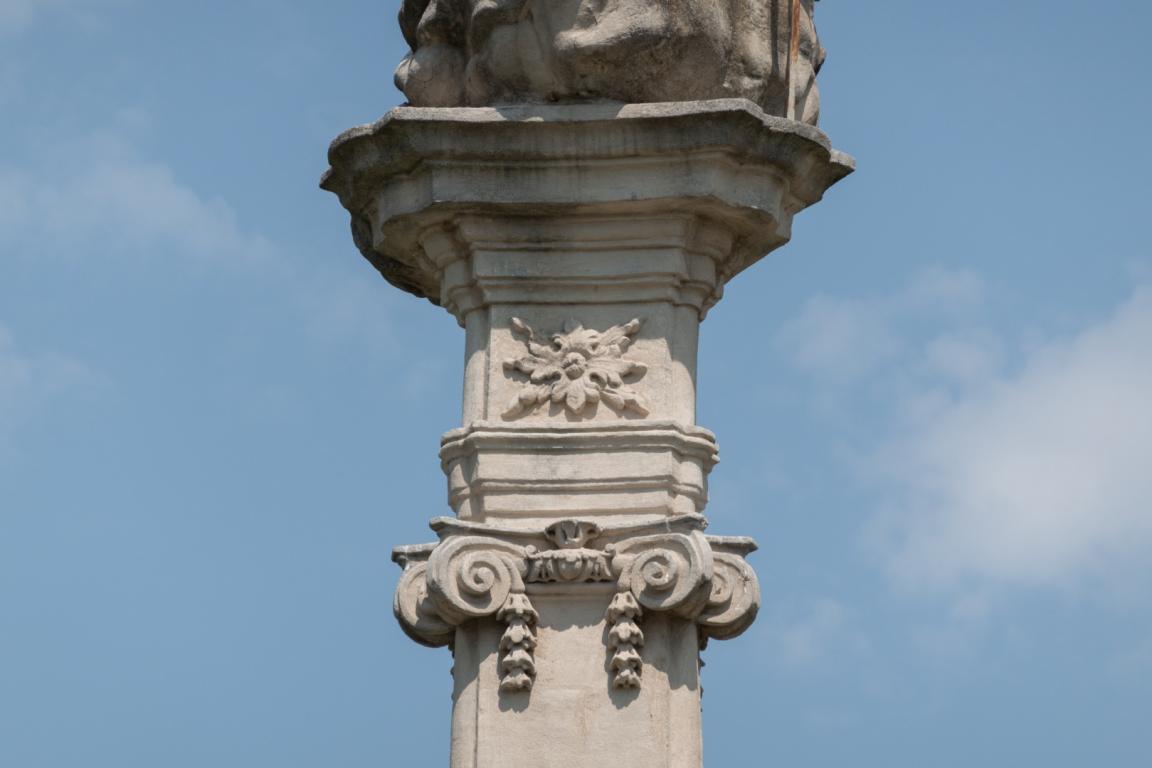
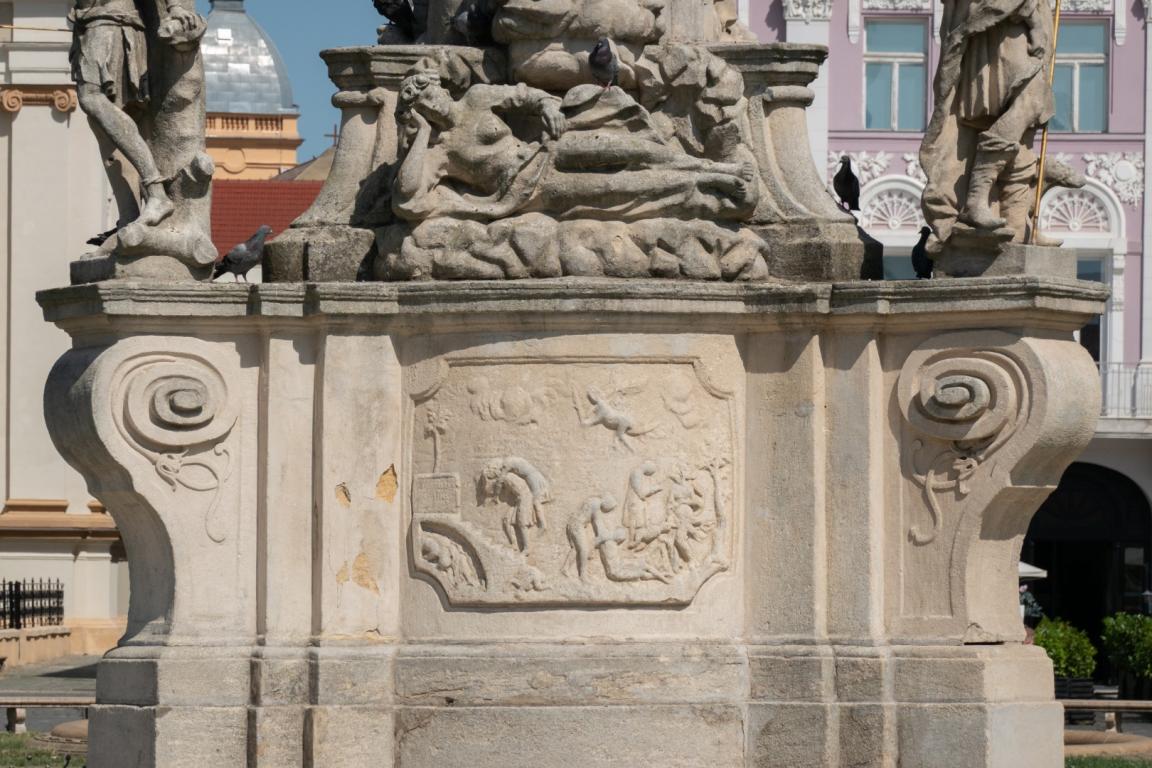
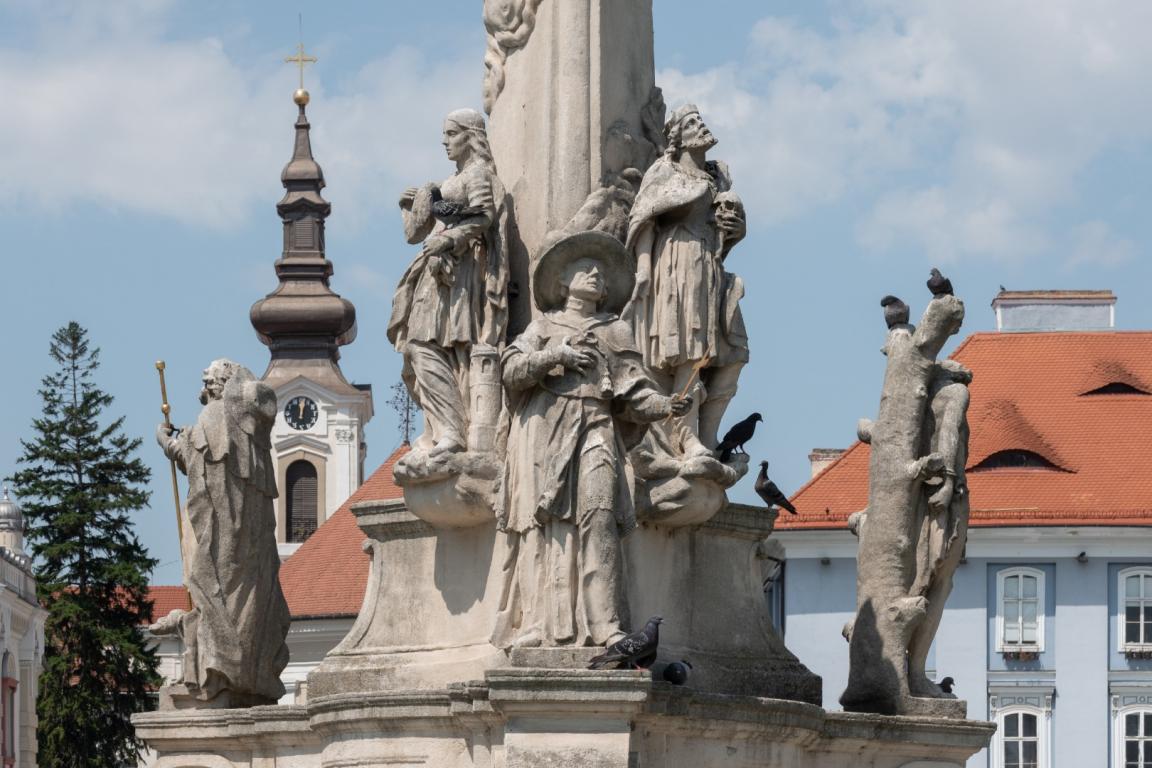
The monument features various representations: on the three convex surfaces at its base are schiacciato reliefs depicting war, plague, and famine. The perimeter statues of Saints Francis Xavier, Anthony, and John of God have not survived. On the three volutes of the pedestal that alternate with the schiacciato reliefs are the figures of Saints Charles Borromeo, Roch, and Sebastian, with Saint Rosalia reclining between the latter two. Higher up are representations of Saint John of Nepomuk, King David, and Saint Barbara, arranged around the triangular Ionic column with slightly concave shafts. At the top, on the entablature above the column, stands the sculptural group of the Holy Trinity with the crowned Virgin Mary.